Read the old feature before you price a new one
Drive a few of Maggie Valley's hillside lanes and you'll pass the same scene more than once: a waterfall tumbling off a porch corner into a pond that has quietly gone green, stonework heaved a few inches off level, a pump house door swollen shut. The homeowners call wanting a rebuild. A good share of the time they don't need one — they need a contractor who will walk the feature and read it first.
Three things separate a repairable water feature from a rebuild. First, the liner: a 45-mil EPDM that still flexes is a different conversation than one that has gone brittle and split at every fold. Second, the base: stone set on native clay across a Valley slope will shift each freeze-thaw cycle, while stone on compacted, drained gravel tends to hold. Third, the pump and plumbing: a system running a pump two sizes too small for the head height was never going to look right, no matter how the rock was stacked. Walking those three items before quoting is the whole job on the front end — and it's why a quote issued from a photo is worth very little here.
What Valley terrain asks of a water feature
Haywood County has two kinds of lots and they behave differently. Waynesville and the valley floor around it are comparatively gentle; parts of that stretch drain poorly and hold water where you don't want it. The uphill lots toward Maggie Valley and the parkway hold grade steeply — a waterfall there can drop 6, 8, 10 feet in a single run, which is beautiful when it's engineered and a mudslide when it isn't. A feature cut into a slope needs a spillway that controls velocity, a base that won't migrate downhill, and a pump sized for the actual total head, including lift and friction loss. Flat-lot features have the opposite problem: no drop, no drama, and a pump working hard to move water it can't lift.
The federal disaster record here explains a lot of the repair calls. 19 declared events touch this county (1973-2026), overwhelmingly flood and storm family, and every one of them re-sorted the ground under at least a few water features. That's why a rebuild scope in this county almost always carries a drainage and grading line item. It's also why the state's environmental rules matter: any work near a stream, wetland, or mapped floodplain may need permitting through the NC Department of Environmental Quality, and stormwater treatment is regulated separately. Confirm the jurisdictional lines before anyone digs.
Scope to price, in county terms
Ranges below are regional working bands, not a bid. On Valley grades, earthwork and access usually move the number more than rock does.
| Scope | Typical range |
|---|---|
| Pump, plumbing, or liner repair on a sound feature | $900–$4,000 |
| Pond cleanout, re-seal, edge reset | $1,200–$5,500 |
| Waterfall rebuild reusing existing stone and liner | $4,500–$12,000 |
| New waterfall and pond build with liner and rock | $9,000–$30,000 |
| Slope stabilization, drainage, retaining below a feature | $3,000–$15,000 |
| Pondless waterfall (basin hidden under gravel) | $4,000–$14,000 |
Items that push a scope over its band: hauling rock up a driveway a truck can't climb, anchoring a feature into a slope that needs its own retaining structure, and any work that crosses into a regulated stream buffer. The Haywood County retaining wall cost breakdown covers the wall side of a rebuild in detail.
Where the wall, the water, and the slope meet
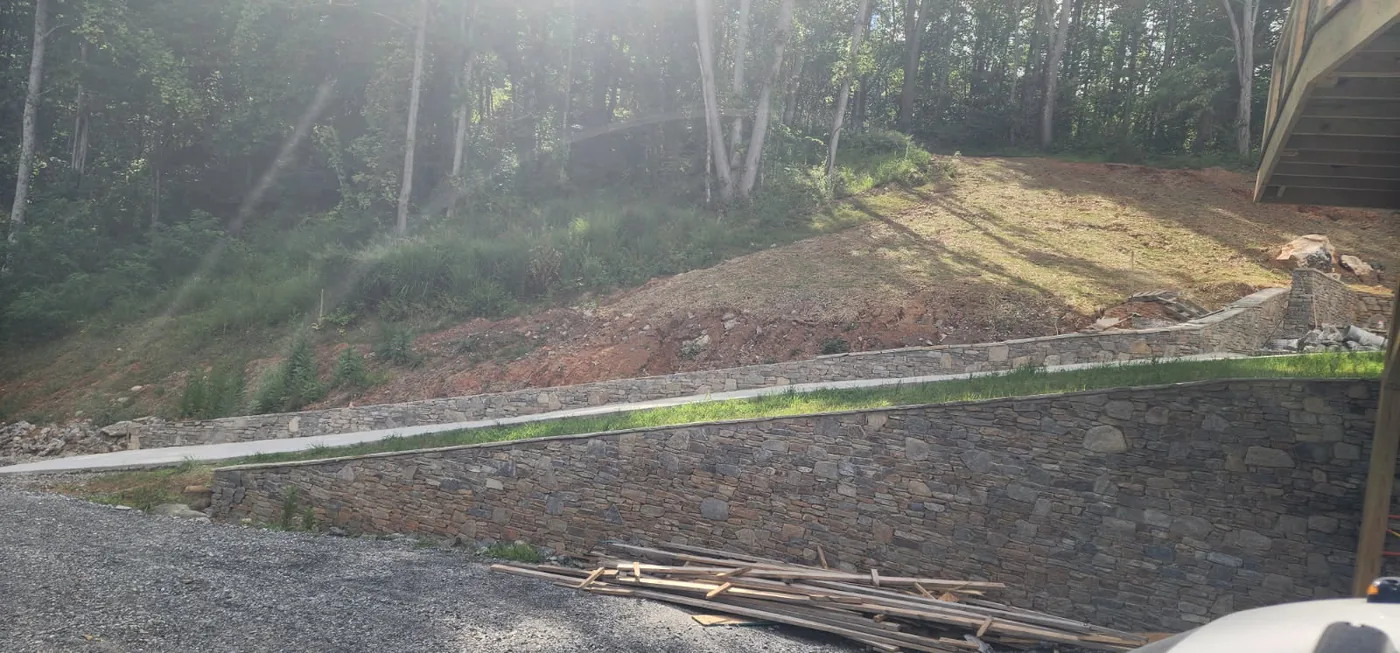
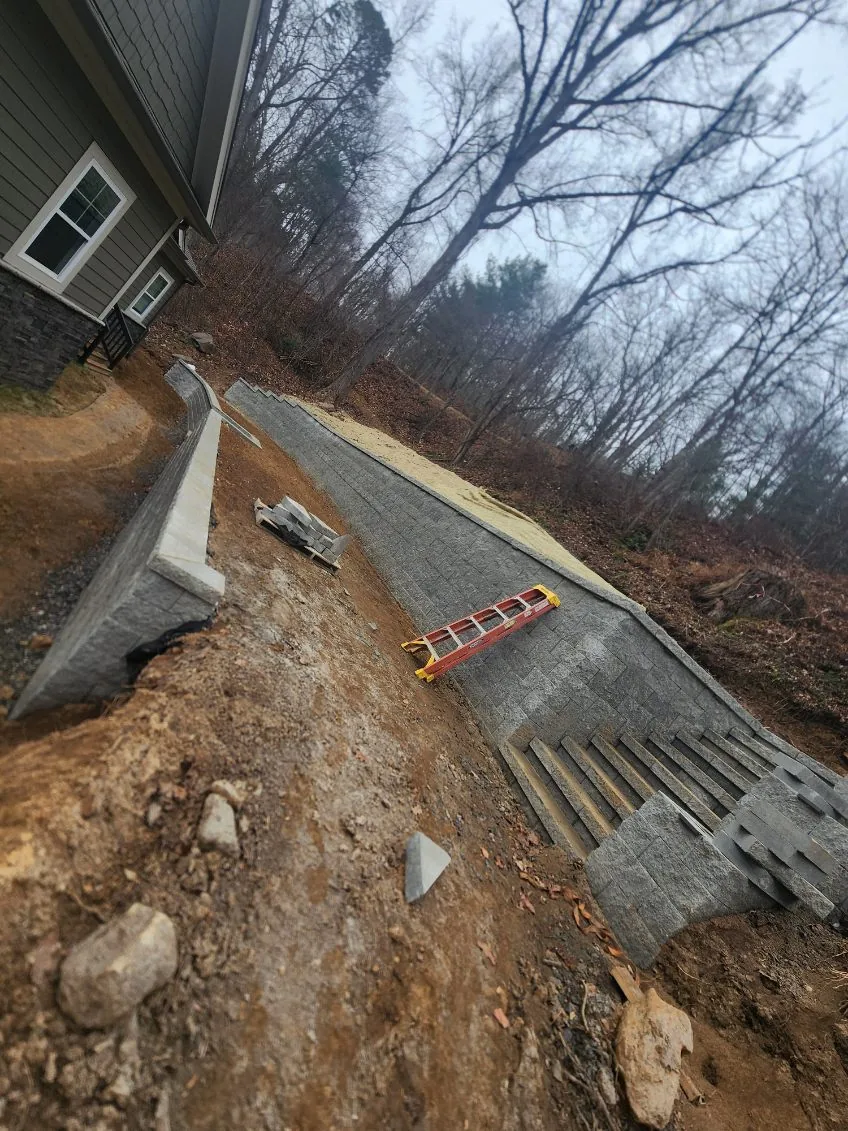
Most Valley water features are really two structures wearing one coat of stone: the water feature, and the retaining wall holding its uphill side. Rebuild one without reading the other and the second call comes within a couple of seasons. A wall that has started to lean or bulge tells you it was built to hold back weight it can't carry — and any feature sitting above it will keep feeding it water. Drainage behind the wall, not the wall itself, is usually the fix.
If a wall is part of the job, the Maggie Valley retaining wall contractors page covers slope-specific scoping, and the general stone waterfalls and ponds page lays out how the two systems get designed together.
Hiring for stonework on this grade
Ask three questions and the field narrows fast. Can you see a feature you built into a slope, not just on flat ground? How will you handle runoff from above the feature, and where does it go? And: will the scope include a written drainage plan? On rocky, steep lots, the answer to the second question decides whether the rebuild lasts. The NC Licensing Board for General Contractors sets the threshold where a job needs a licensed general contractor; on a rebuild that mixes excavation and structural stone, that line gets crossed more often than homeowners expect. Where the base will touch soil that could carry water during a storm, the National Weather Service local forecast history for Haywood County is worth a look before finalizing a grade. And rock or masonry work that ends up in a wall, footing, or drainage structure may need to meet the state's adopted building code — the International Code Council publishes the model codes NC bases its on.
Repair, rebuild, or replace
The decision is usually simpler than the sales pitch makes it. If a feature has a sound liner, a pump that moves the right volume for the head, and stone on a base that hasn't migrated, the honest recommendation is repair — new plumbing, a fresh liner patch, a reset waterfall lip. If two of the three are gone, a partial rebuild reusing the sound elements usually beats starting over. Full replacement makes sense mainly when the base was never engineered for the grade, the plumbing is buried where it can't be serviced, or the feature was built into ground that sheds water onto it. Reading the feature first is what separates a quote that holds up from one that comes back for a second visit.