Where Montreat water comes from, and where it has to go
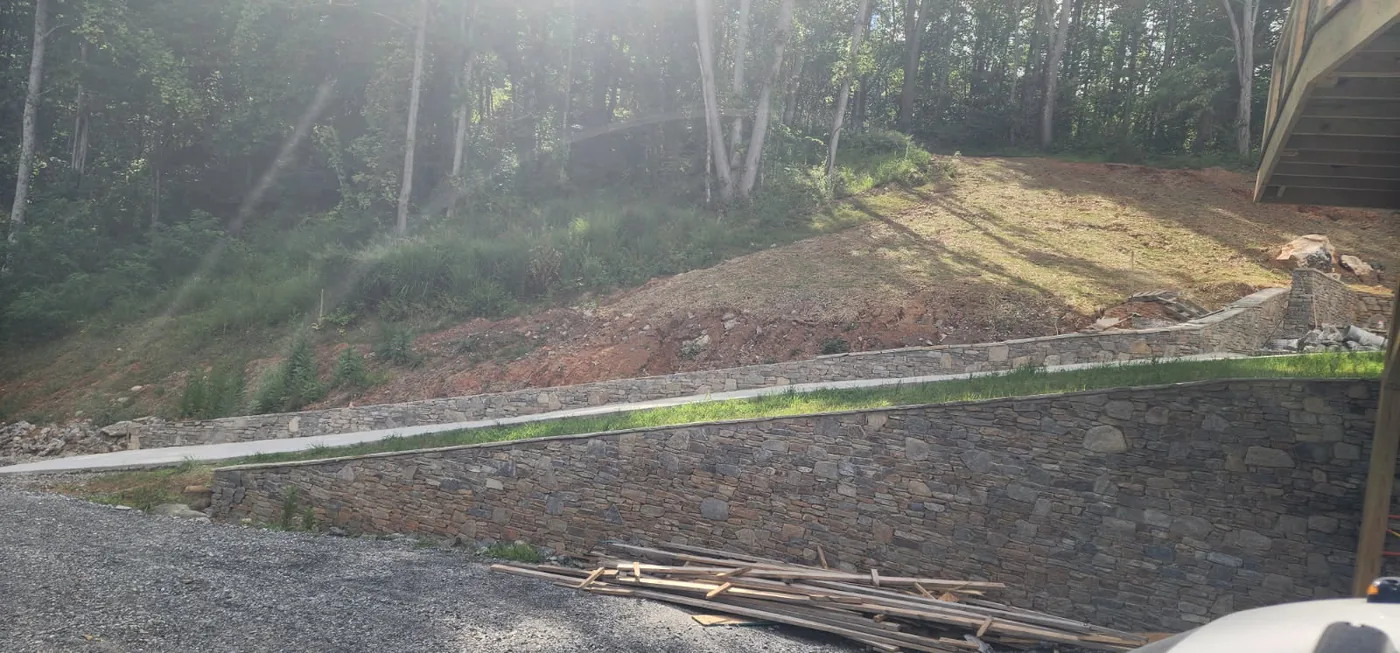
Montreat is built into a cove. Rain that lands above a house on a 20 or 30 percent grade does not wander — it arrives at the base of the wall, and it arrives fast. That is the first fact of any veneer job here, and it is why the drainage question has to be answered before the first stone is set. Water that sheets down a hillside and pools against a veneer base will find the weep system, or it will find the mortar. One of those outcomes is a wall that lasts decades; the other is spalling, efflorescence, and a call back in five years.
The fix is not exotic. It is graded swales above the wall, clean weeping at the base, and a footing that sits below the frost line rather than on it. Montreat's freeze-thaw cycle — freeze at night, thaw by afternoon, repeat through February — punishes any veneer that traps moisture behind the stone. Read the assembly the way a builder would, from the soil up, and the scope writes itself.
What the work actually involves on a hillside lot
Stone veneer is a drainage assembly wearing stone. On a Montreat slope, that means a waterproof barrier over the substrate, a drainage plane that lets water fall to the weep screed, and a scratch-and-brown coat that gives the stone something to hold. Then the stone itself, laid so the wall can still breathe. On flat ground any crew can get this right. On a slope where the uphill grade meets the top of the veneer, the margin for error shrinks.
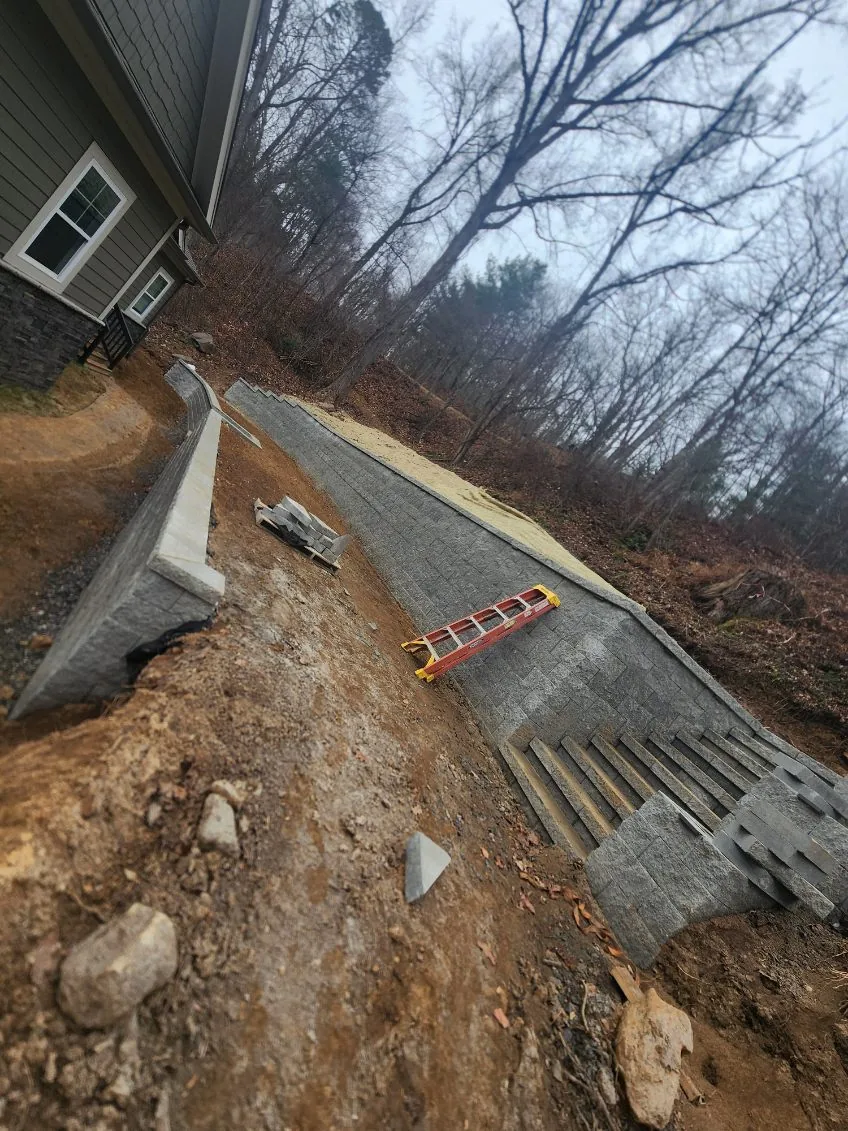
The scope usually breaks into four pieces: prep and moisture management behind the wall, the lath and scratch coat, the stone installation, and the base detail where the veneer meets grade. The last one is where Montreat jobs differ from a flat-lot job in Arden. If the veneer base sits below the surrounding soil line, water wicks into the stone from below. If it sits too high above, the finished wall looks unfinished. Getting the grade and the veneer base to agree is the detail that separates a wall that ages well from one that stains within a season.
For the broader material and assembly picture, see the stone veneer overview — it walks through thickness, backing, and finish options before you commit to a look.
The Montreat price picture
Ranges below reflect what regional crews charge for real installations on Buncombe County hillside lots, before any retaining or drainage work that is quoted separately. Actual numbers depend on square footage, stone selection, access, and how much correction the site needs.
| Scope | Typical range |
|---|---|
| Accent wall or single-column veneer | $1,800-$4,500 |
| Fireplace surround and chimney face | $4,500-$11,000 |
| Full front facade on a single-story home | $12,000-$24,000 |
| Full home exterior, two stories | $28,000-$65,000 |
| Drainage correction before veneer (site-specific) | $1,500-$8,000 |
Access is a real cost driver on these lots. A wall that a wheelbarrow can reach quotes differently than one where material has to be carried up a switchback. Get the scope in writing with the drainage line item separated, so you can see what you are paying for and why. If the veneer sits against a failing retaining wall, that has to be solved first — the Buncombe County retaining wall cost breakdown covers those numbers separately.
Water first, then stone
Buncombe County's federal disaster record is dominated by storm and flood events — 19 declared events across 1973-2026. That history is why the National Weather Service's flood and precipitation guidance (weather.gov) reads as local knowledge here rather than a distant warning. Every one of those events pushed water at walls that were built for a drier assumption. A veneer installed without accounting for that water is a veneer installed to fail — not dramatically, but predictably.
Before a stone quote, the site needs three questions answered: where does uphill water go, how does the wall dry after a wet week, and what happens at the base detail when the ground freezes. The Montreat retaining wall contractors page covers the structural side of hillside sites; veneer and retaining work often travel together. If the two conversations are happening as one, good — that is how these lots actually get built.
Hiring a stone veneer crew for this terrain
State law sets a licensing threshold for general contracting, and any crew working above it should be able to show credentials — start with the NC Licensing Board for General Contractors. Beyond paperwork, ask three questions specific to Montreat: have they installed veneer on a hillside where the uphill grade meets the wall, how do they handle the weep and drainage plane, and who is responsible if water shows up behind the wall after the stone is set. The answers to those three questions reveal more than any portfolio photo.
Also confirm the assembly meets current code for moisture management. The International Code Council (iccsafe.org) publishes the adopted codes North Carolina works from, and veneer over a framed wall is one of the assemblies those codes care about most. A crew that can explain the code's reasoning, not just recite it, is a crew that has done the work before.