Before you rebuild: reading what's already in the yard
Drive almost any Fairview back road and you'll pass the same scene: a patio or wall that was clearly built for a flatter, drier piece of ground than the one it's sitting on. Fairview's housing runs from older farmhouse lots along Cane Creek to 1990s-and-newer builds cut into ridge slopes off Garren Creek and Charlotte Highway, and the hardscape failures here follow the terrain, not the calendar. Before anyone quotes you a tear-out and replacement, the honest first step is reading what's there: a wall losing its batter (the lean-back built into good stone) is often a drainage problem, not a stone problem, and a patio with a low spot against the house is usually a grading problem, not a paver problem.
Older flagstone and stacked fieldstone walls around Fairview were frequently built as dry-stack or lightly mortared garden walls carrying almost no load. They can be beautiful and worth keeping, but they were never engineered to hold back a graded slope, and rebuilding them taller or heavier is a different job than repairing them. Ask three plain questions before you spend: what is this feature actually holding back, where does its water go now, and what would it cost to repair versus replace? Our hardscaping overview walks through how we decide repair versus rebuild, and it starts with what the existing feature is actually doing, not how it photographs.
The Fairview price picture
Buncombe County pricing reflects the terrain: see the full Buncombe County retaining wall cost breakdown for line items. The short version: walkway and small patio work starts in the low thousands, retaining walls price per face square foot, and fire features and full outdoor rooms land at the top of the range. Any quote on a significant slope that doesn't include engineering, drainage, or machine access as separate line items is incomplete, not cheap. Fairview's narrow gravel drives and wooded lots routinely add access costs that a flat in-town yard never sees, and those costs are real whether you repair or rebuild.
Retaining walls on Fairview's slopes
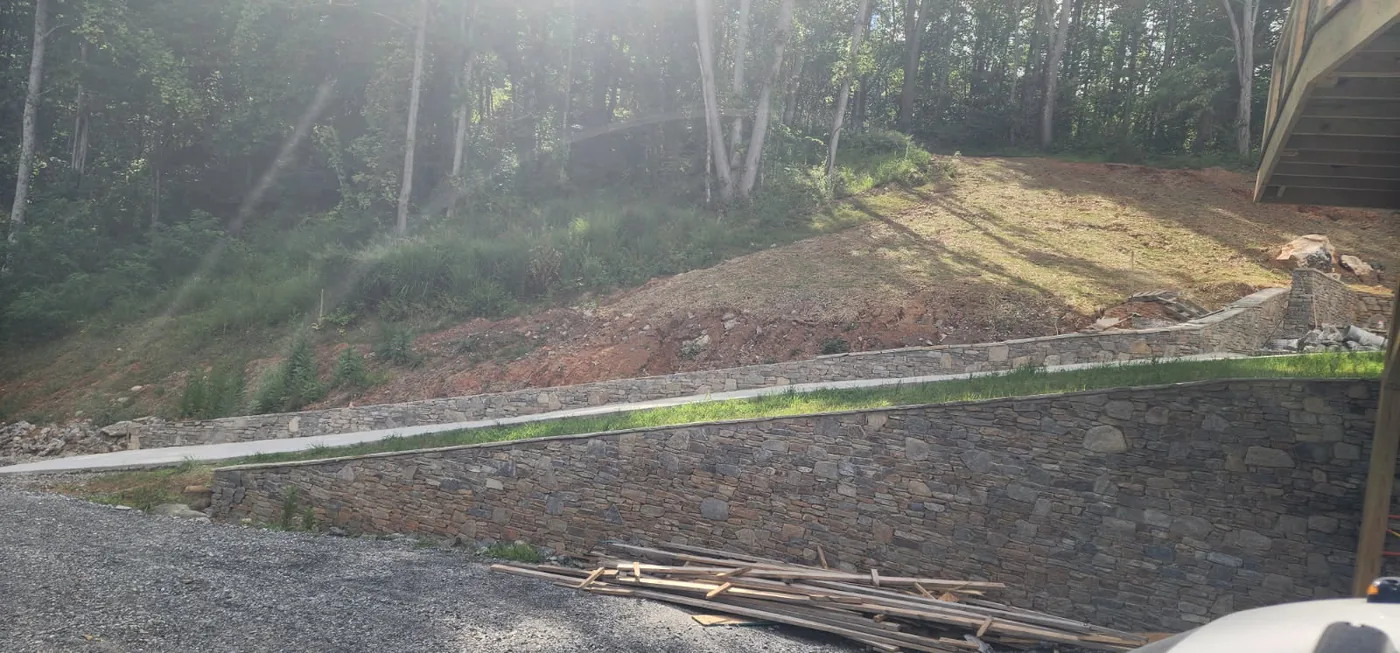
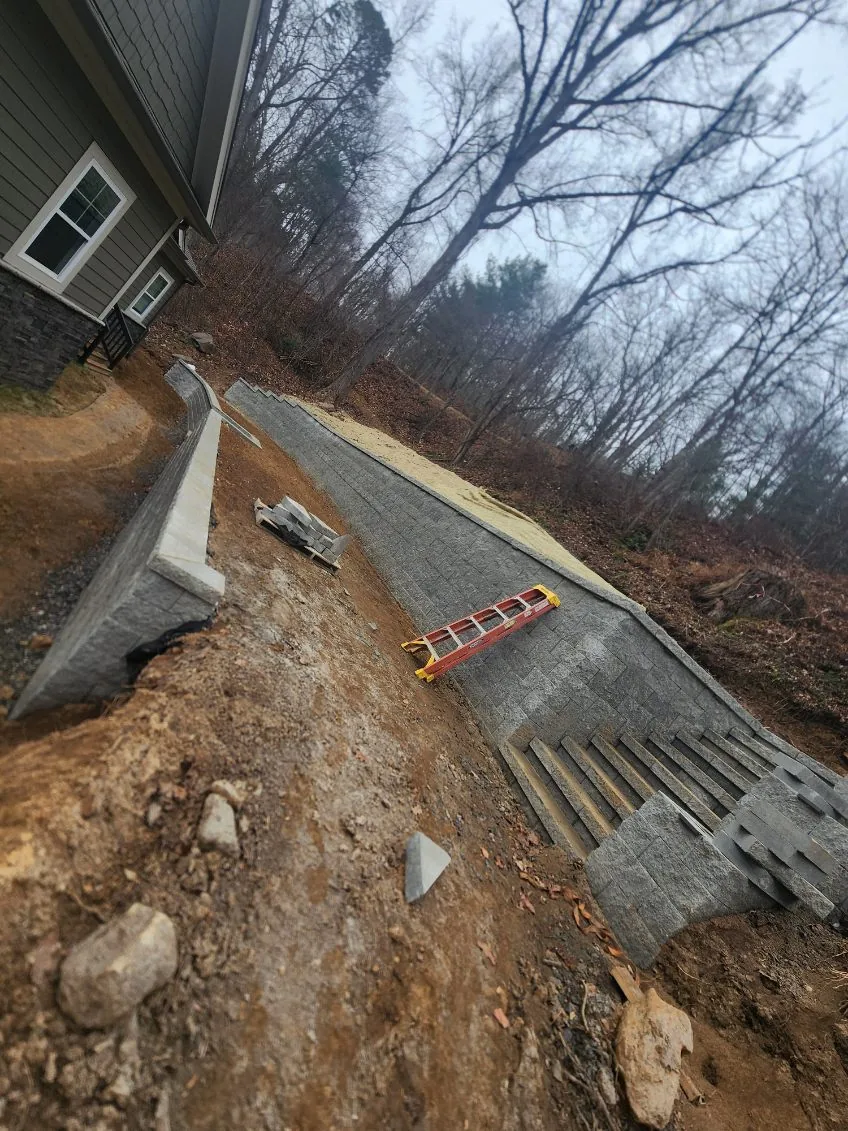
Retaining walls are where Fairview hardscaping gets serious. A wall over a modest height, or one holding back a surcharge (a driveway, a structure, a slope above it), crosses into engineered territory under North Carolina rules. The NC Licensing Board for General Contractors sets the threshold at which a licensed general contractor must be involved, and walls tied to a structure need an engineer's letter regardless. The International Code Council publishes the model codes most NC jurisdictions adopt, including the footing, drainage, and backfill requirements that separate a wall that lasts from one that leans in five years.
Fairview-specific reality: our soils and slopes mean water management is half the job. A wall built without proper drainage stone and outlets will fail no matter how good the block looks on day one, which is also why the repair-or-rebuild call on an existing wall usually comes down to whether its drainage was ever correct. For wall-specific scopes, scheduling, and what the work actually involves, the Fairview retaining wall contractor page goes deeper.
Scope versus price: what drives the number
Hardscape pricing in this region is a function of scope, access, and how much hidden work the slope demands. The table below gives honest regional bands; your site will move them.
| Scope | Typical regional range | Price drivers |
|---|---|---|
| Paver or flagstone patio (200-400 sq ft) | $6,000-$18,000 | Base prep depth, grade, material |
| Walkway or path | $2,500-$8,000 | Length, steps, edging |
| Retaining wall (per face sq ft) | $30-$60 | Height, engineering, drainage |
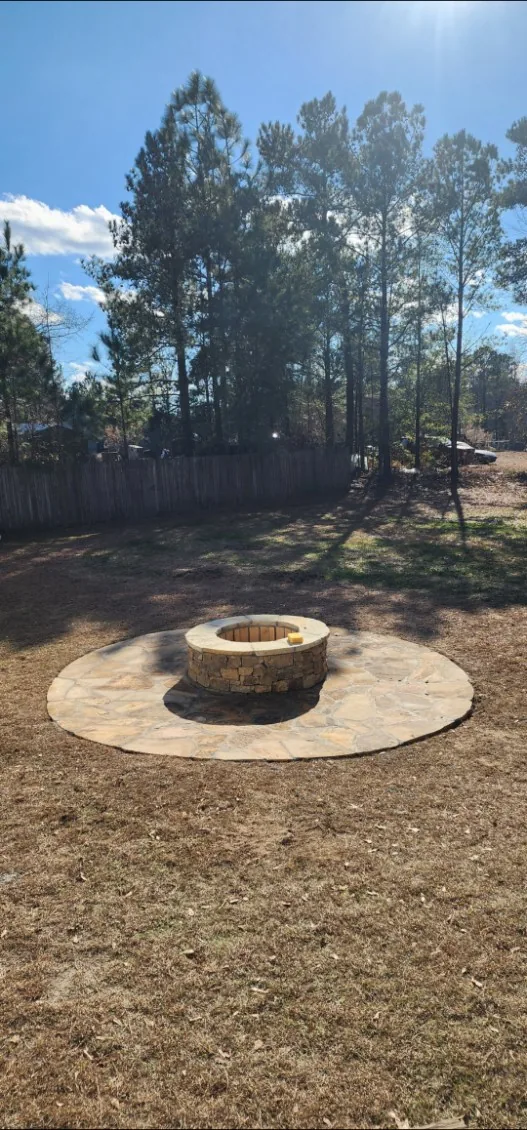
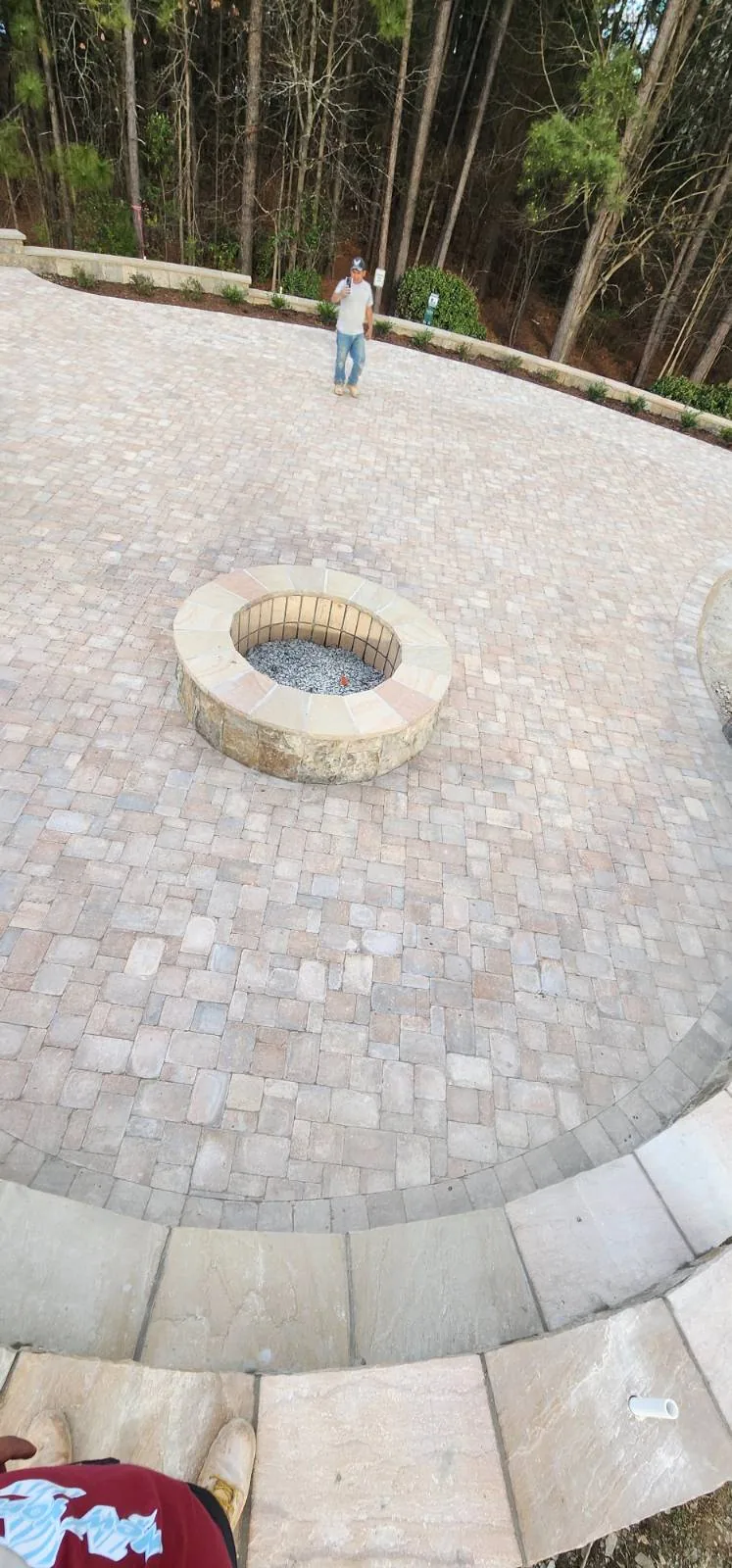
| Fire pit area | $3,500-$12,000 | Built-in vs. kit, surround, seating wall |
| Full outdoor room (patio + wall + fire feature) | $25,000-$65,000+ | Combined engineering, access, finishes |
Access is the quiet multiplier in Fairview. A lot off a paved road with a flat staging area prices very differently from a wooded ridge property where every pallet of stone comes up a narrow drive on a tracked machine. Repairing an existing patio often sidesteps some of that access cost, since base and edging may already be in place.
Storm water and the case for doing drainage right
This corner of Buncombe County has a long federal disaster record: 19 declarations touch the county across 1973-2026 of records, and it's overwhelmingly storm and flood family. That history matters for hardscaping, because a patio or wall is a drainage structure whether you meant it to be or not. If the new surface sends water toward the house, or a wall traps it against a foundation, the failure shows up a season later. The National Weather Service tracks the rainfall patterns behind it; the practical takeaway is that Fairview hardscape work should be designed for the wet years, not the average ones.
The EPA's guidance on stormwater and runoff (epa.gov) is worth a skim before you approve any design that changes how water moves across your lot. Good hardscape crews answer the drainage question before they quote the stone, and the same question decides whether an existing feature is repairable or past saving.
Working with a Fairview hardscape crew
Three local checks before you sign: ask for the engineer's letter on any wall over the modest-height threshold, ask how they handle machine access on a sloped or wooded lot, and ask what happens to the water your new patio creates. A crew that answers the third question without prompting is the one to hire, and the same crew will tell you honestly when an existing wall or patio is worth repairing instead of replacing. We serve Fairview and the surrounding Buncombe County area, and the full service page covers patios, walls, fire features, and the repair-versus-rebuild call.