Why four feet decides the price on a Maggie Valley build
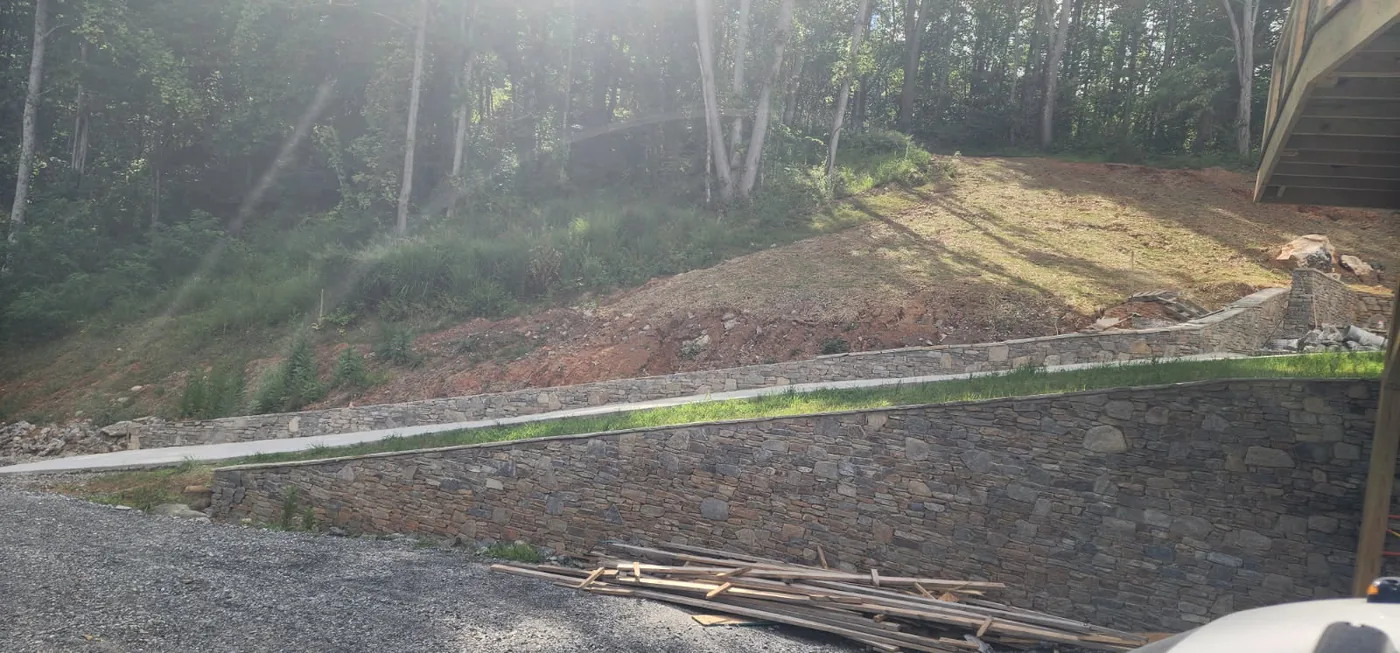
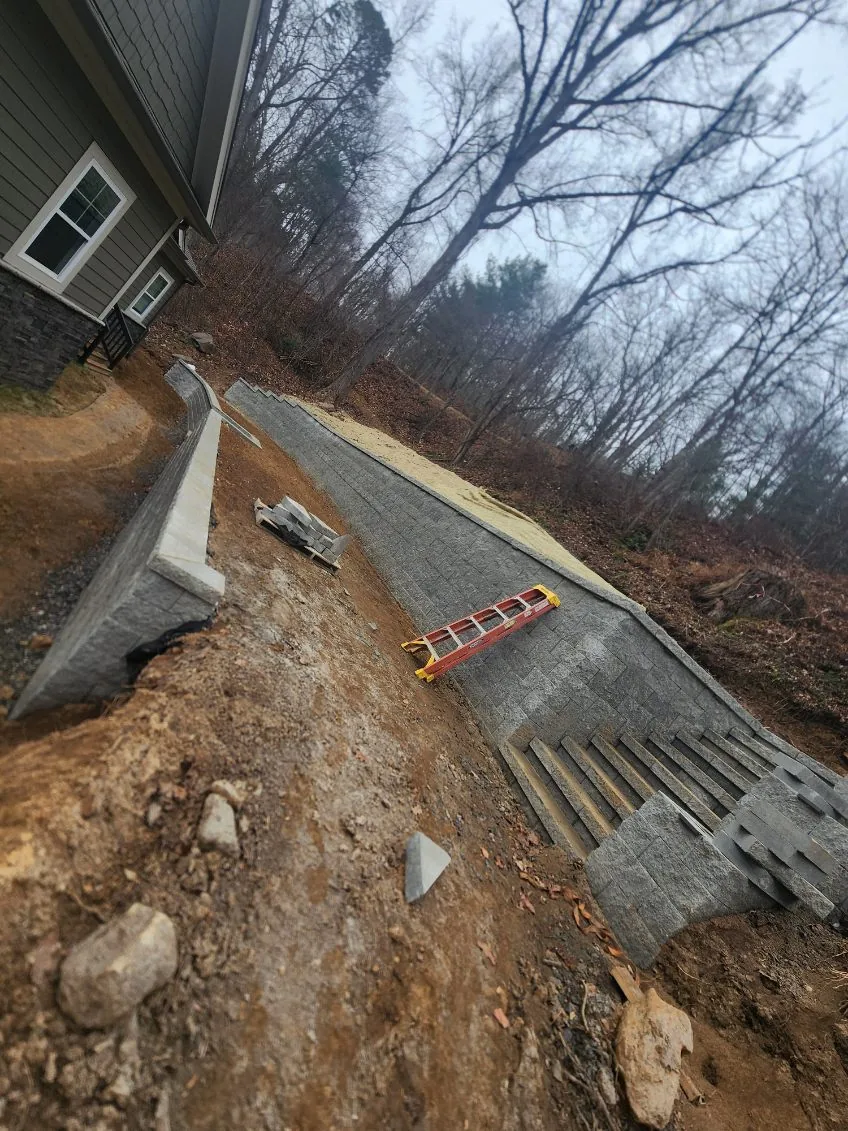
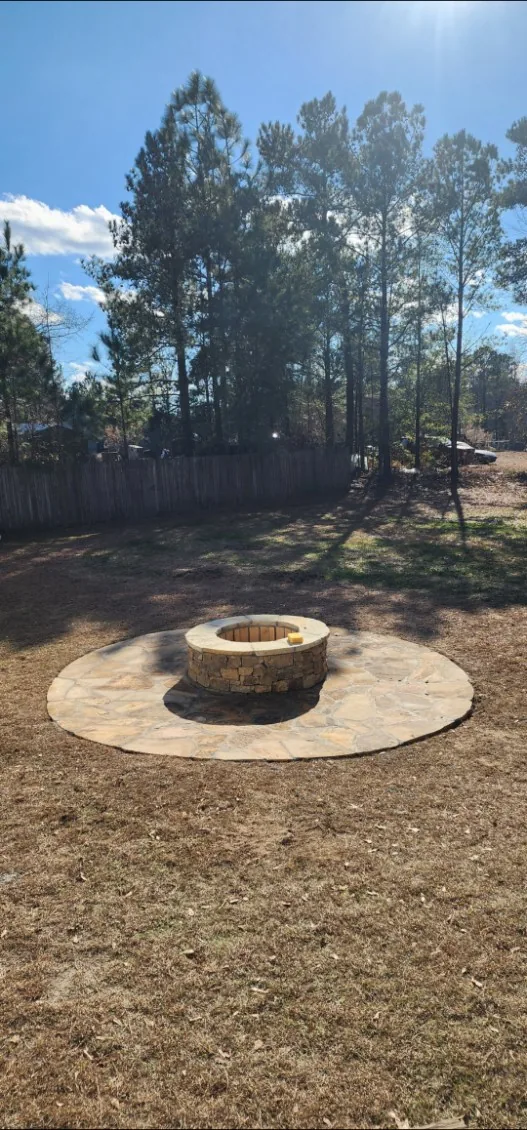
Drive a few of the side roads off Soco and you'll see the same pattern all over Haywood County: a fire pit set into a slope, ringed by a low stone seat wall. Below four feet of retained height, that wall is landscaping. At four feet, the math changes. North Carolina's residential code treats any retaining wall measuring four feet or more from the bottom of the footing to the top of the wall as a structure, which means stamped plans from a licensed engineer, a building permit through Haywood County, and inspections before backfill. That single measurement is why two neighbors can get quotes thousands apart and both are correct.
This is the line we walk every estimate. If your finished patio sits nearly level with the surrounding grade, you are buying masonry and a burner. If it sinks into a cut bank or juts out over a drop, you are buying masonry plus an engineered wall, and the wall does the heavy work. Honest bids say which one you have before a shovel moves.
What real bids look like around here
Ranges below are typical for a professionally built hardscape fire feature in the Maggie Valley and Waynesville area. They include materials, labor, gravel and sand base, and cleanup. Rock is sold by the ton and varies more than customers expect, so a build using native fieldstone sourced locally often undercuts a build using trucked-in dimensional stone.
| Scope | Typical range |
|---|---|
| Wood-burning pit, block core, stacked stone veneer, gravel base | $4,800-$7,500 |
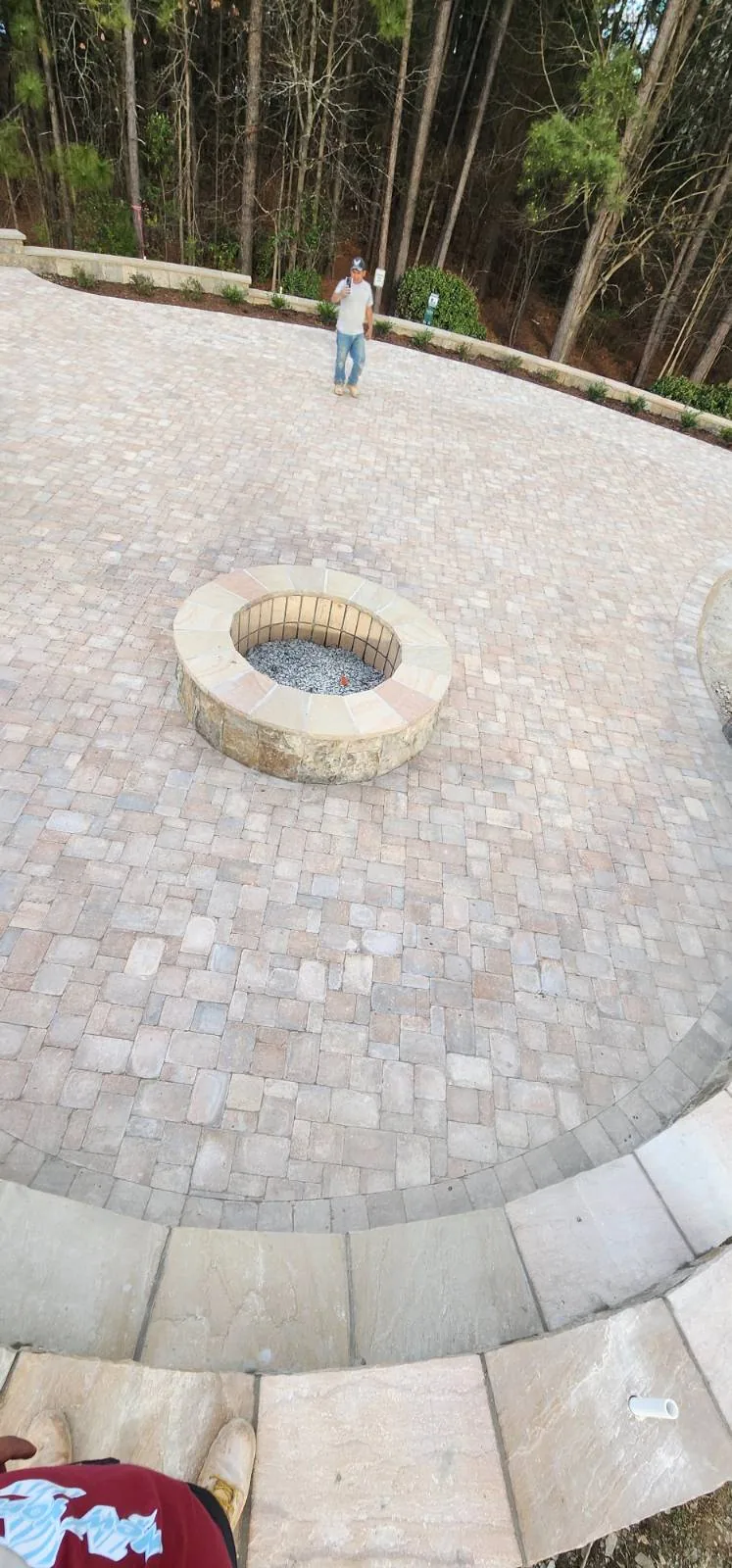
| Gas insert, plumbed line, stone veneer, capped with a paver surround | $7,000-$11,000 |
| Pit with curved seating walls, seat caps, and step access | $9,000-$14,500 |
| Retaining wall under four feet beneath the patio, decorative only | $1,800-$4,200 |
| Engineered wall four feet or taller, plans and permit pulled | Quoted per project after site visit |
Those last two rows are the fork in the road. The Haywood County retaining wall cost guide breaks down what a taller wall adds in engineering and inspection line items, and the Maggie Valley retaining wall page covers who builds them on sloped lots. Read both before you sign anything. A pit quote that doesn't mention the wall below it is describing half the job.
What the four-foot line triggers
Once a wall crosses the threshold, expect three additions to a landscaping quote: an engineering letter, permit fees, and inspection scheduling that holds up backfill until the wall is seen. The licensing questions also get sharper. Work that qualifies as general contracting falls under the North Carolina Licensing Board for General Contractors, and if the build includes a plumbed gas fire pit, the installation must be done by a contractor licensed through the NC State Board of Examiners of Plumbing, Heating and Fire Sprinkler Contractors. Ask for both credentials separately. One does not substitute for the other, and a handyman is not the right crew for a gas line.
For smaller patio and wall jobs, the code provisions that actually matter are drainage and footing depth. Frost depth in this part of the mountains is modest, but clay-heavy soils around the valley floor push water at everything, and a footing dug too shallow on a slope is how the pit tilts a year later. The International Code Council publishes the model code most NC jurisdictions adopt, which is why a four-foot wall in Maggie Valley and a four-foot wall in Charlotte read the same rulebook.
Smoke, fire bans, and what you can actually burn
Two practical realities of building here. First, mountain winds: a fire feature at the edge of an open ridge gets gusts that flatland pits never see, which affects screen height, seating-wall placement, and how far a wood pit sits from anything combustible. Second, burn restrictions. Haywood County has seen its share of dry seasons, and during county or state burn bans an outdoor wood fire can be prohibited regardless of how well the pit is built. If a wood fire you cannot always use is a problem, a gas build sidesteps the ban entirely. Gas also sidesteps smoke, which matters on small lots where the neighbor's window sits twenty feet away.
Where the county record matters: 19 federally declared disaster events have touched this area across a record spanning 1973-2026, and they skew heavily toward flooding and storm water rather than fire. That history is why we talk about water before any of this starts. A patio that ponds or guts its way downhill takes the fire pit's footing with it, and no landscaping quote protects you from water that was never redirected. Grade, gutters, and where the uphill runoff lands come first. The pit is the reward, not the foundation.
Choosing a builder without guessing
Ask three questions and the field narrows fast. Ask how they handle lateral loads on a sloped lot, not just how the pit will look. A builder who answers with footing depth and drainage is telling you they have built on grade before; one who answers with color options has not. Second, ask for the wall height in writing, measured from bottom of footing to top of cap. That number determines whether you need an engineer, and it should be on the page, not in a text thread. Third, ask whether rock is priced by the ton at a set rate or as a lump sum. Local fieldstone is plentiful in Haywood County and the price difference over imported stone runs into four figures on larger builds.
When you are ready, the fire pit project overview walks through design options and what a first site visit covers. Bring a photo of your yard and a rough idea of how you will use the pit. Weeknight sitting for two and full-family gathering for twelve are different builds, and the right scope should be sized to how often you will actually light it.