Where the money actually goes on a Marshall build
A waterfall quote for a Marshall yard is really four or five separate purchases bundled into one line. The stone is rarely the biggest one. On most lots off the Shelton Laurel and Laurel bottom roads, machine access and spoil removal eat more of the budget than the rock, because a track machine has to fit between a driveway culvert and a house corner before anything gets stacked. After that comes the basin: liner, underlayment, and a properly sized pump vault. Then come the invisible items homeowners forget, which are the ones that decide whether the feature survives its third spring.
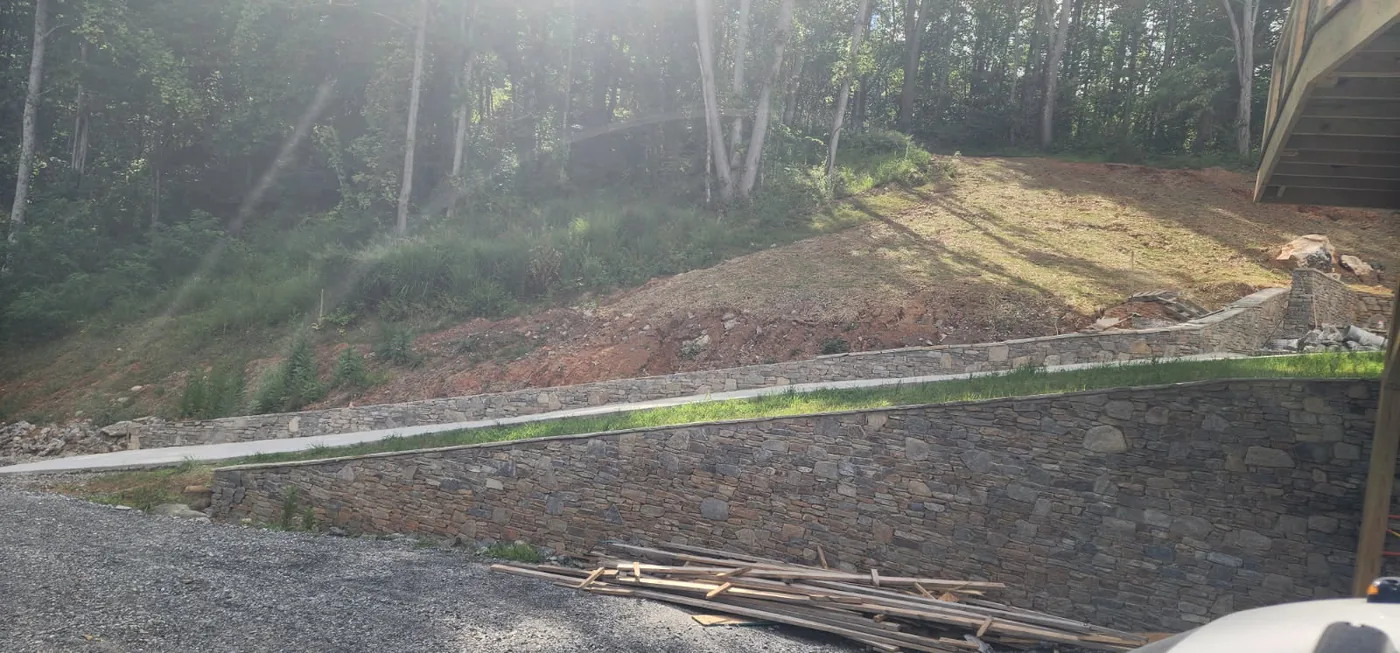
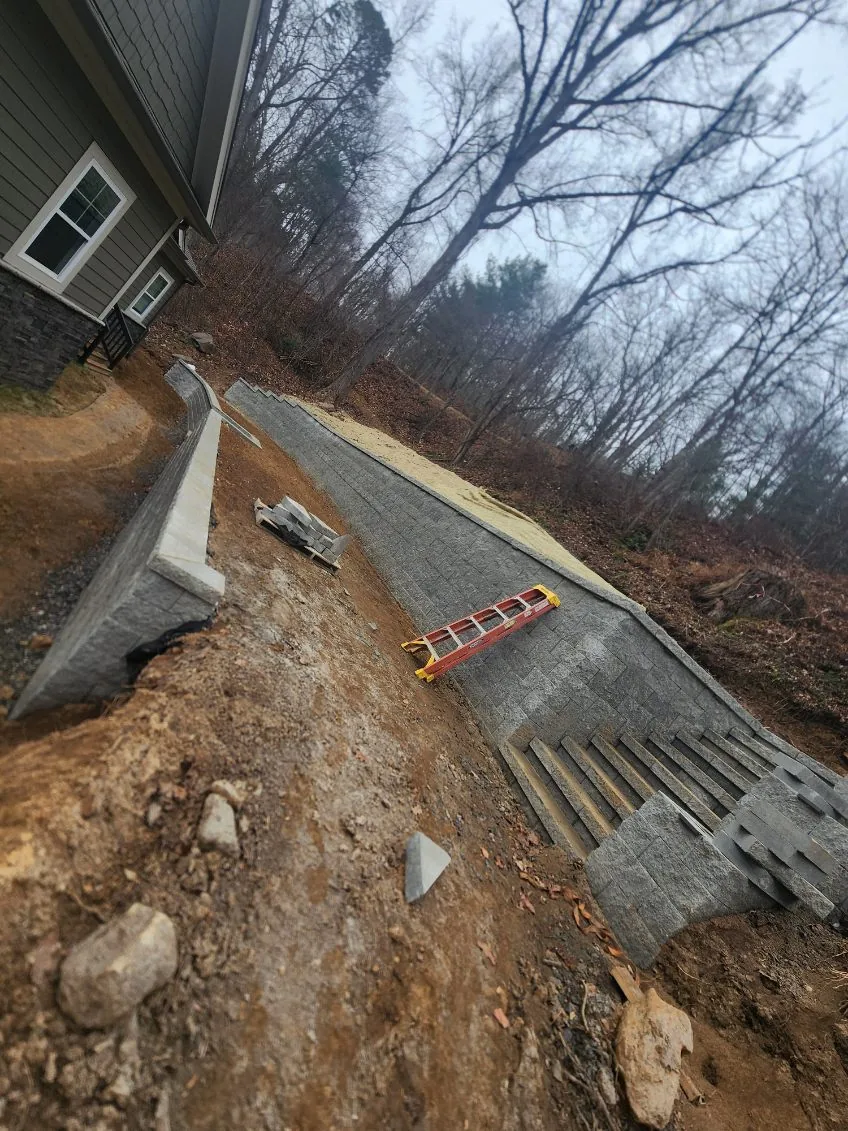
On the steeper graded lots that climb away from the French Broad, retaining structure is a line item on its own. A fall that drops more than two or three feet on a cut slope needs engineered bracing behind the stone, not just stacked rock. That work overlaps with the numbers on our Madison County retaining wall cost breakdown, because it is the same problem: holding soil while water moves through it.
Scope versus realistic price range
| Scope | Typical installed range | What moves it |
|---|---|---|
| Small pre-formed or boulder-less spill, 2-3 ft drop | $3,800-$6,500 | Access, basin size, whether power is already at the site |
| Single natural-stone fall into a lined pond, 6x8 ft basin | $6,500-$12,000 | Stone haul distance, liner gauge, pump and filtration level |
| Multi-tier falls with pondless reservoir | $10,000-$18,000 | Vertical drop, boulder tonnage, hidden vault and grate work |
| Falls tied into slope retention or a wall build | $14,000-$22,000+ | Engineering, drainage design, amount of cut into the hillside |
Ranges assume a residential lot with reasonable machine reach. A site where the only entry is a hand carry down a switchback path can push the low end up by thousands before a single stone is set.
Madison County ground behaves a certain way
Madison sits in the mountain corner of the state where the soil is thin, the rock is close, and the grade rarely gives you a flat pad for free. Marshall itself is a river town pinched between the French Broad and steep wooded hillside, so a surprising number of properties have their only usable yard either above or below the house. Water here does not linger the way it does in the piedmont; it arrives fast off a slope and leaves fast, which is good for a waterfall's feed and hard on the surrounding grade if nobody plans the overflow.
The federal record backs up the local instinct: 21 declared events touch this county across 1978-2026, and the dominant family is storm and flood. Every one of those events sent concentrated runoff at hillside yards that were never designed to shed it. That is why we treat a waterfall's spillway and the path its overflow takes as seriously as the fall itself. The National Weather Service's local forecast and flood resources at weather.gov are worth watching before scheduling ground work in a wet stretch.
Water, permits, and where the rules actually bite
A backyard pond that stays under the state's impoundment thresholds is normally a straightforward project. Once the structure is meant to hold back a meaningful volume of water, or the work touches a stream or its buffer, the rules change. North Carolina treats stream buffers and buffer impacts as a regulated activity, and the starting point for any question near a creek that runs off your slope is the NC Department of Environmental Quality. A waterfall that recirculates from a buried reservoir is a closed loop and stays on the simple side; a pond fed by damming a flowing branch is a different category of job entirely.
Structural work above a certain value falls under general contractor licensing rules from the NC Licensing Board for General Contractors. Most residential water features sit under that threshold, but a project that includes a substantial retaining wall, a deck rebuild, or a larger site plan can cross it. Ask early, because a compliant bid and a non-compliant one rarely look different on paper.
Reading a Marshall waterfall bid without getting burned
The bids that come back too cheap almost always leave out the same three things. First, the reservoir or vault design, which is what actually makes a pondless fall work and is invisible once buried. Second, the liner and underlayment spec, where a thinner material in rocky Madison ground punctures within a couple of seasons. Third, and biggest, the overflow and drainage plan for the ground around the feature. When a hard rain dumps off the hill above a yard, the pond has to be able to send that water somewhere sensible, and that path has to be part of the build, not an afterthought.
Working with a crew that also builds the surrounding retaining and hardscape structure means the waterfall, the wall behind it, and the drainage that ties them together get designed as one system. You can see how that work is organized on our stone waterfalls and ponds service page, and if a wall build is likely, the Marshall retaining wall contractors page covers what to check before signing.