The line items that actually move a Marshall wall quote
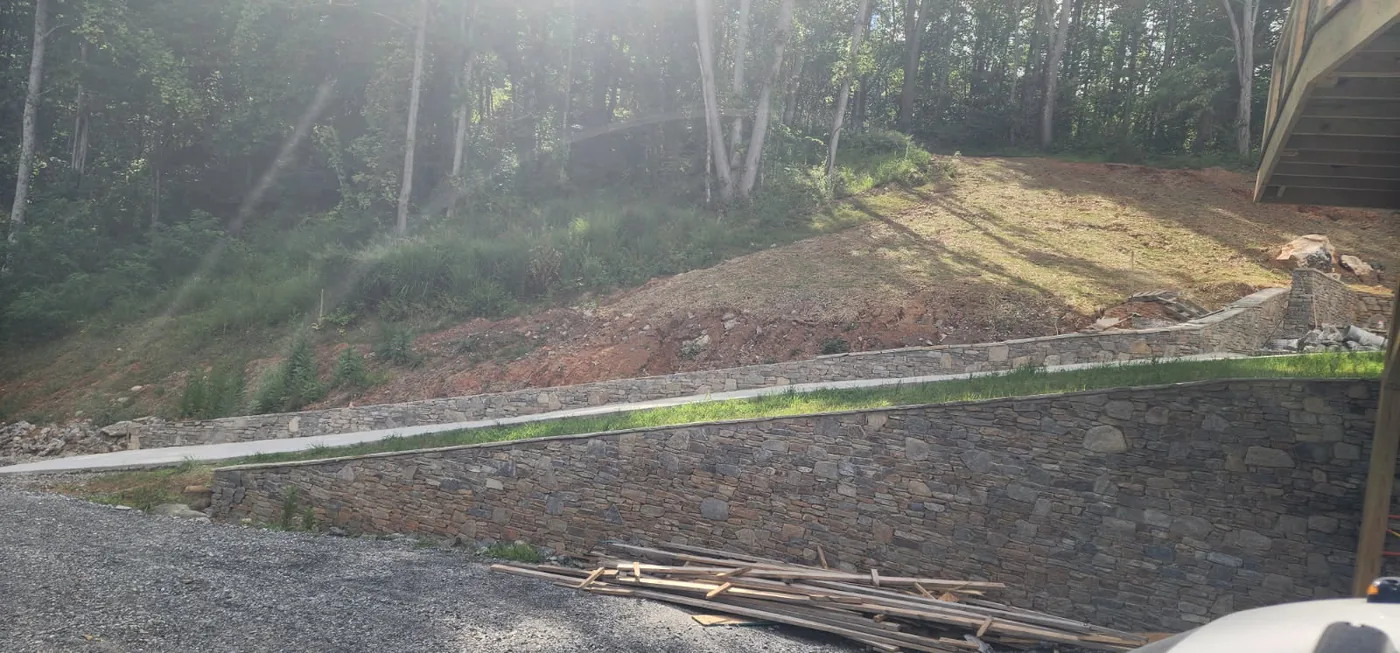
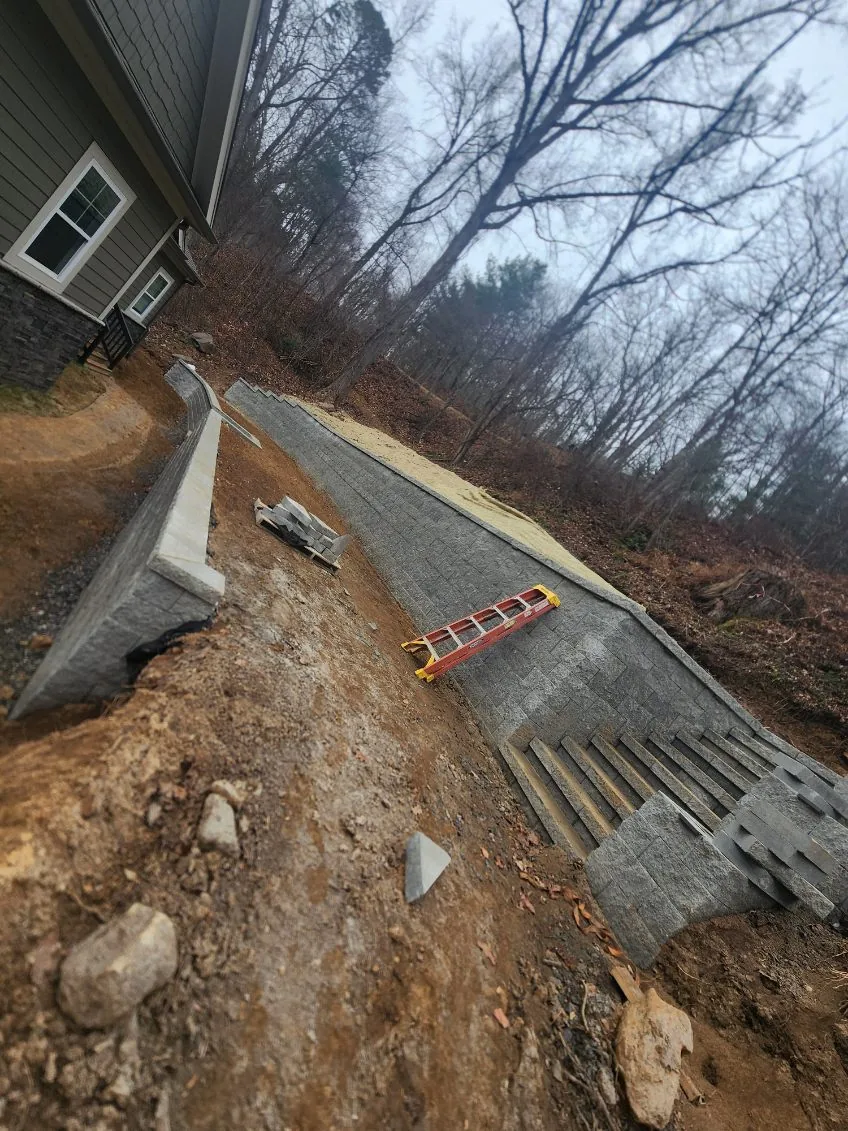
On a typical Marshall lot, retaining wall repair is rarely one price. It is a stack of small numbers that a good contractor can walk you through before signing anything. The biggest line item is almost always drainage: a wall that is bulging in Marshall is usually a wall that has been holding water it was never built to hold. That means weep holes, gravel backfill, perforated pipe, and somewhere for the water to go — none of which is optional on a Madison County hillside. Second is access. A wall behind a house on a narrow road off Highway 25 or 70 costs more per block than the same wall in a flat driveway, because every pallet is hand-trucked or boom-lifted. Third is wall height and batter. A three-foot wall can often be repaired in place; a six-foot wall that has rotated needs to come down to gravel before it goes back up. Fourth is facing material. Replacing a match for old native stone or a discontinued block color is slow work. Fifth is structural reinforcement — geogrid, deadmen, or a replacement of the footer — which is where a repair stops being a repair and starts being a rebuild.
One more line item that surprises homeowners: haul-off and disposal. A failed wall has to leave the site, and on a steep Marshall lot that often means a dumpster parked at the road and material carried down by hand or machine. It is not glamorous, but it is real money, and it belongs in the quote. A contractor who itemizes drainage, access, reinforcement, and disposal is giving you a document you can actually compare against another bid — not a single lump number with no visible logic behind it.
What a Marshall wall repair costs, by scope
These are working regional bands for Madison County, not bids. Every wall is priced after someone looks at the soil, the water, and the access.
| Scope | Typical range | What drives the number |
|---|---|---|
| Cap reset, spot repointing, weep-hole cleaning | $350–$1,200 | Wall run length, cap material match, hand access |
| Section rebuild, same block, drainage added | $1,200–$2,800 | Linear feet rebuilt, gravel and pipe, disposal |
| Full rebuild under 4 ft, engineered base | $2,800–$5,500 | Footer prep, geogrid, soil replacement, haul-off |
| Tall wall (4–8 ft) with engineering or geogrid | $5,500–$8,500+ | Design letter, excavation, reinforcement, staging |
| Drainage-only retrofit (French drain, grading, outlets) | $1,000–$3,200 | Run length, outlet location, slope of discharge |
If a quote is far below the low end for the scope you were sold, ask what is not included — drainage, disposal, and gravel are the usual omissions. See the full Madison County retaining wall cost breakdown for the county-wide picture.
Why Madison County walls fail the way they do
Madison County sits in the French Broad watershed, with steep ground, thin mountain soils, and a wet-season water table that can rise fast. Add the federal disaster record — 21 declared events touching this county across 1978-2026, overwhelmingly storm and flood family — and you have a place where retaining walls are asked to do more than their builders assumed. The failures we see most: hydrostatic pressure behind under-drained walls, which pushes a wall out at the base; footer undermining on slopes where runoff has been concentrated by a downspout or a driveway; rot and loss of tieback on timber walls from the 1980s and 1990s; and settlement cracks where a wall was built on native soil without a compacted gravel base. The EPA has good plain-language material on stormwater and runoff if you want to understand the water before you talk to a contractor about the wall. In practical terms, on a Marshall hillside the water question usually has to be answered before the block question.
Who can legally build or repair a wall here
North Carolina does not license masons as a standalone trade, but it does regulate general contracting above a dollar threshold, and a retaining wall that is structural, tied to a foundation, or part of a larger grading plan can cross that line. The NC Licensing Board for General Contractors publishes the thresholds and the complaint process, and it is worth knowing both before you hire. For walls over four feet, or any wall that is surcharging a slope near a structure, expect the repair to need design input and, often, a local permit. The International Code Council maintains the model codes many local amendments build on, if you want to see how wall and foundation provisions are organized. If a crew tells you a four-foot-plus wall on a slope “never needs a permit in Madison,” treat that as a signal, not a discount. The Marshall retaining wall contractor guide covers what to ask and what documentation a serious crew should be able to show.
Repair, rebuild, or remove: reading your own wall
The three tells that separate a repair from a rebuild: a bulge you can see by eye or catch with a level, a horizontal crack running the length of the wall (that is the wall telling you the base is moving), and soil pushing through the face, which means the wall has already lost. Minor cracks, spalling caps, and single loose stones are repair territory. Anything with rotation, lean, or movement between seasons is rebuild territory, and on a Madison County slope the rebuild should include drainage even if the old wall did not. If the wall is holding a cut that is now failing uphill, removing the wall is sometimes the honest answer, and a good contractor will say so. Start with the retaining wall repair overview for what a proper assessment looks like, then get eyes on the actual wall before you commit to a direction.