The four-foot line decides half of what you'll pay
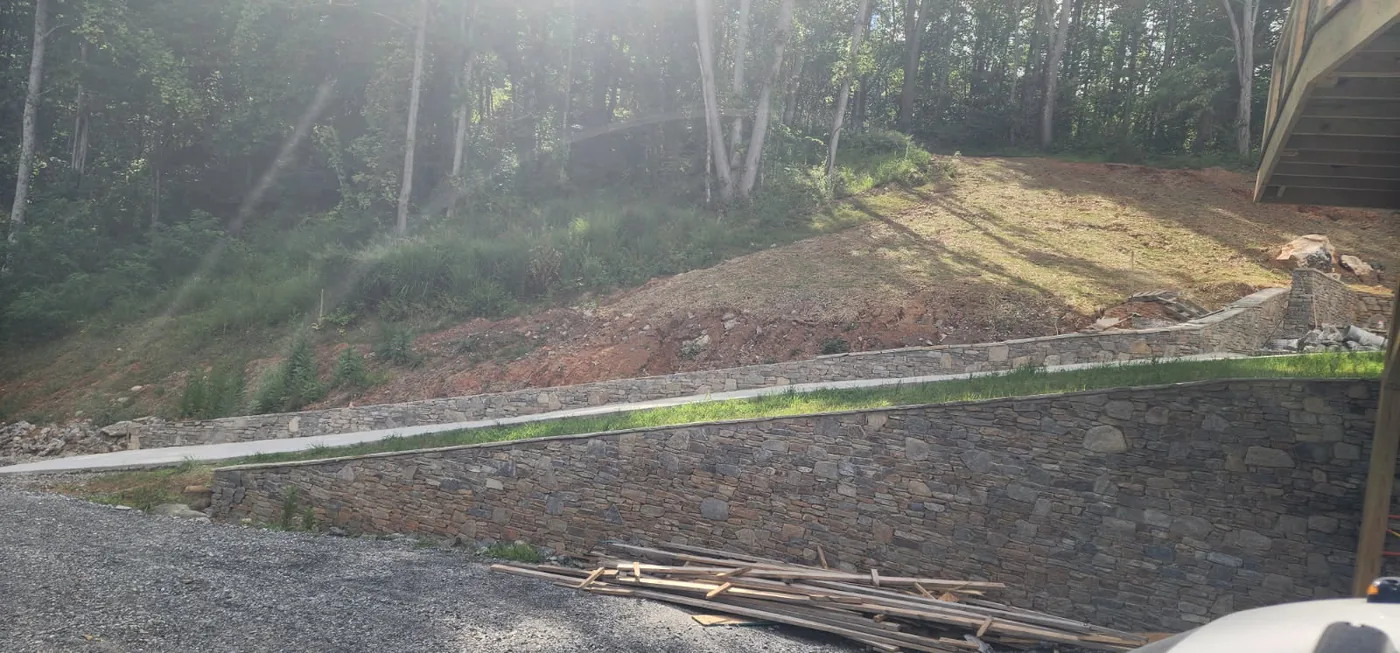
Drive the older hollows off Reems Creek Road and you'll see the pattern: a timber wall, maybe knee-high when it was built, now bulging three or four courses up the hillside because the grade behind it got cut higher over the years. In Weaverville, the single most expensive question about a retaining wall is not what's wrong with it — it's how tall it stands above the soil it holds. Walls under four feet of retained height generally don't trigger engineered design in North Carolina residential work; walls at or over that line usually do, and the paperwork is what separates a repair quote you can compare from one you can't.
That line also carries a contractor question. Projects that cross it fall under the classification thresholds set by the NC Licensing Board for General Contractors, and the folks who dig into structural retaining walls for a living usually layer in engineering from the start. A wall holding a driveway or a house pad above four feet is a structure, not landscaping. Our retaining wall repair overview walks through how each wall type fails before you start calling anyone.
What a Weaverville wall actually costs to fix
Weaverville is one of the steeper settled pockets in Buncombe County. The town sits where Reems Creek and the French Broad valley flats meet North Carolina hill country, so a single street can hold a flat-lot fence-height wall and a terrace wall holding a slope behind a split-level, both needing work for very different money. Use the ranges below as the honest starting picture; the working breakdown per wall type is in our Buncombe County retaining wall cost table.
| Scope | Typical range | What drives it |
|---|---|---|
| Rebuild a low timber wall (under 3 ft, under 20 ft long) | $1,200–$3,500 | Length, access, whether the old posts pull clean or shatter |
| Cracked block or segmental wall, partial rebuild with drainage correction | $3,000–$9,000 | How much of the wall is failing, footing condition, where the water goes |
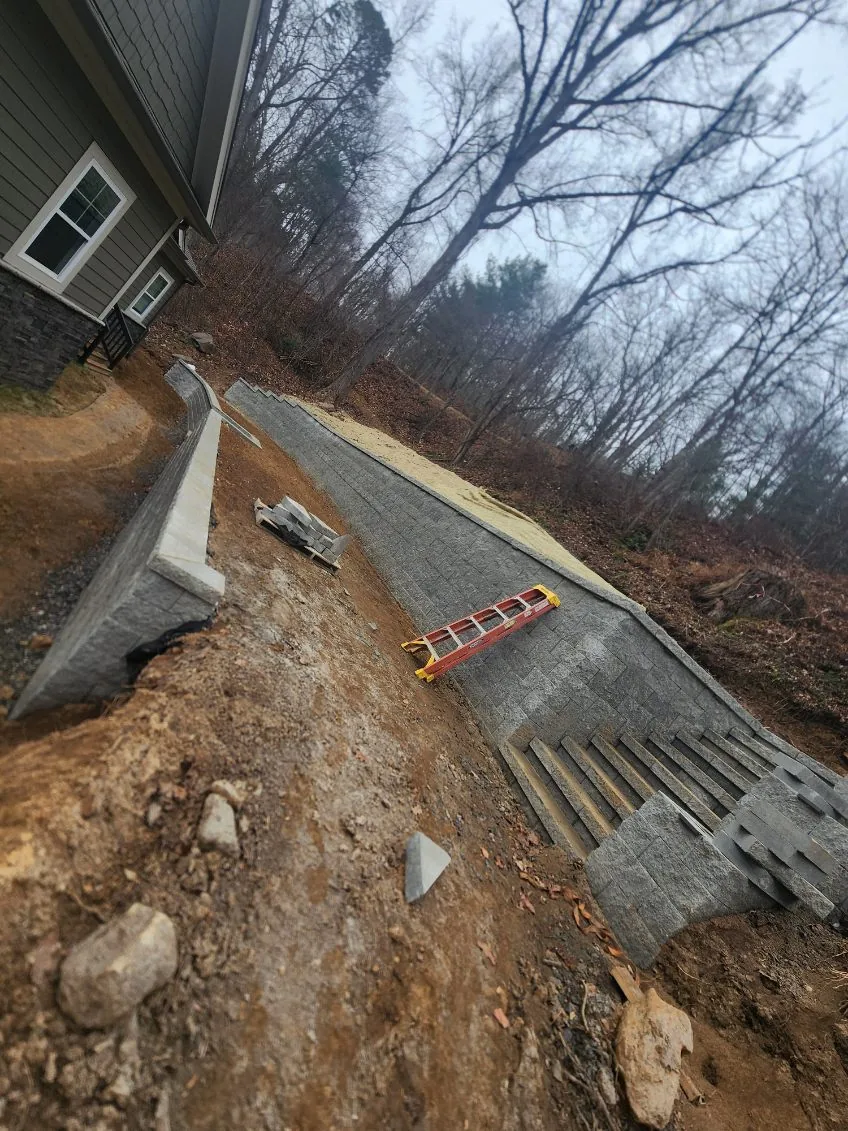
| Full rebuild of a residential wall (3–4 ft retained, 30–60 ft run) | $9,000–$19,000 | Block or natural stone, soil, slope above, hauling |
| Wall past the 4-ft line with engineering and permit | $18,000–$28,000+ | Design, compaction, footing depth, inspections, permit timeline |
Steep-access jobs — walls behind houses with no equipment path, creek-side lots, anything needing a track machine run through a side yard — add labor that flatland quotes never show. A bid that ignores access is incomplete, not cheap.
Drainage is the repair most walls actually need
In this valley, most battered walls failed because water found the backfill and never left. Weaverville's north-facing slopes stay damp; spring storms come in on the same storms the weather service counts as our wettest events. Across this county, 19 federally declared disasters have touched the area over a 1973-2026 record — overwhelmingly water-driven. A wall rebuilt without fixing drainage is a wall somebody rebuilds again in a decade. That means gravel and a weep path behind every repair, the grade above the wall re-shaped to shed away, and any spring or gutter line redirected before new block goes in.
The relevant code principles — footings bearing on stable soil, drainage treated as part of the assembly, not an afterthought — show up in the state's adopted building code, published through the NC Office of State Fire Marshal. And if a failed wall is also moving a house pad or threatening a foundation, the sequencing question matters: drainage and earth stability come before structural work. When a wall has already dropped a footing, the job stops being landscaping entirely.
Reading a Weaverville wall before you spend
Walk the wall and note four things: how it leans (lean is measured top to bottom, not by eye), how many courses have separated, whether water stands at the base after a rain, and whether the ground above it has been regraded in the last few years. A wall that leans out more every season is moving; a wall that holds one lean all year is just old. A wall with black staining and visible water lines is a drainage failure first and a block failure second. When the movement is structural — footing shifted, courses separated, soil creeping past the wall face — that's where a licensed general contractor gets involved, and our Weaverville retaining wall contractor guide covers the questions to ask before signing anything.
Hiring for hillside work around town
Two checks cut through most of the noise. First, ask whether the person quoting has built on your slope, not just your street — walls holding terraced yards in the Weaverville hills require footing depth and compaction that flat-land fence-height walls don't. Second, get clarity on the 4-foot line for your wall: if the proposal crosses it, ask who is stamping the design and who carries the permit. Repair pricing should be itemized by scope (demo, footing, drainage, block, backfill), not a single lump figure. And when slopes wash out after storms, the National Weather Service tracks the flood and flash-flood forecasts that should delay any earthwork; several repairs on water-damaged walls simply wait for a dry window.