Where the water goes decides the price
Most patio bids in Buncombe County fail not at the pavers but at the base. Asheville sits in a bowl of ridges, and almost every yard here is either shedding water toward the house or catching water from uphill. A patio is a lid on the ground, and if the lid sits above soil that stays saturated, the pavers migrate, the joints fail, and somebody is back out there in two winters resetting the whole field. So the first question on any quote should be where the water is coming from on your lot type and where it has to go. On a ridge lot above Haw Creek or however your particular slope runs, that means an uphill interception, a graded sub-base that sheds to daylight, and often a curtain drain behind the patio edge. On a West Asheville flat with a high water table, it means the opposite: you're getting water up, not down, and the fix is a compacted open-graded base over geotextile that lets it drain without pumping the soil.
Buncombe's climate keeps this an expensive conversation. FEMA records show 19 federally declared disaster events touching Buncombe County across 1973-2026, most of them storm and flood family. That history shows up in every backyard here as saturated subgrade, washed-out base, and patios that heaved a season after install. A paver patio cost in Buncombe County is really a drainage number with pavers on top. On lots where the drain has to daylight above the patio, a small sump and pump becomes part of the scope, and that single decision can swing a quote by a couple thousand dollars before a single paver is set.
What homeowners here actually pay
The ranges below are honest working bands for this county, not quotes. Hillside lots come in higher than valley lots for the same square footage because the base work, hauling, and retaining are different jobs entirely.
| Scope of work | Typical Buncombe range | What drives it |
|---|---|---|
| Ground-level patio, standard pavers | $6,500 – $12,000 | square footage, paver tier, excavation depth |
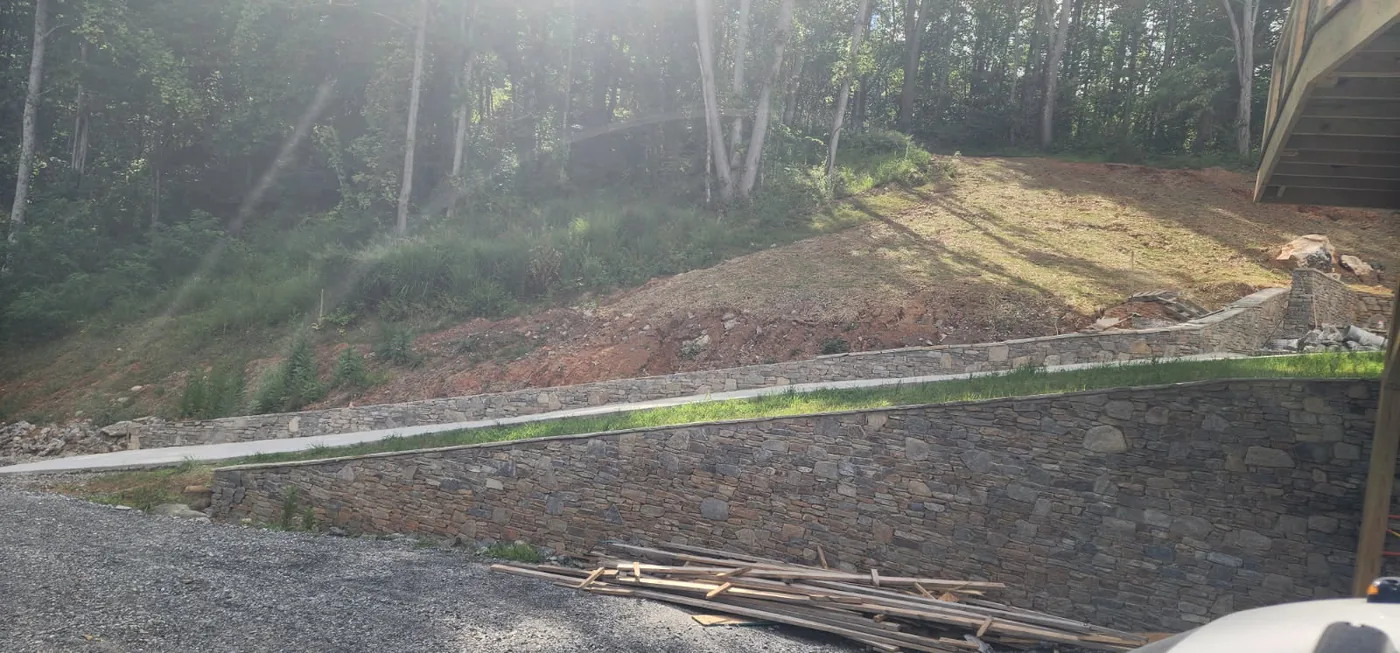
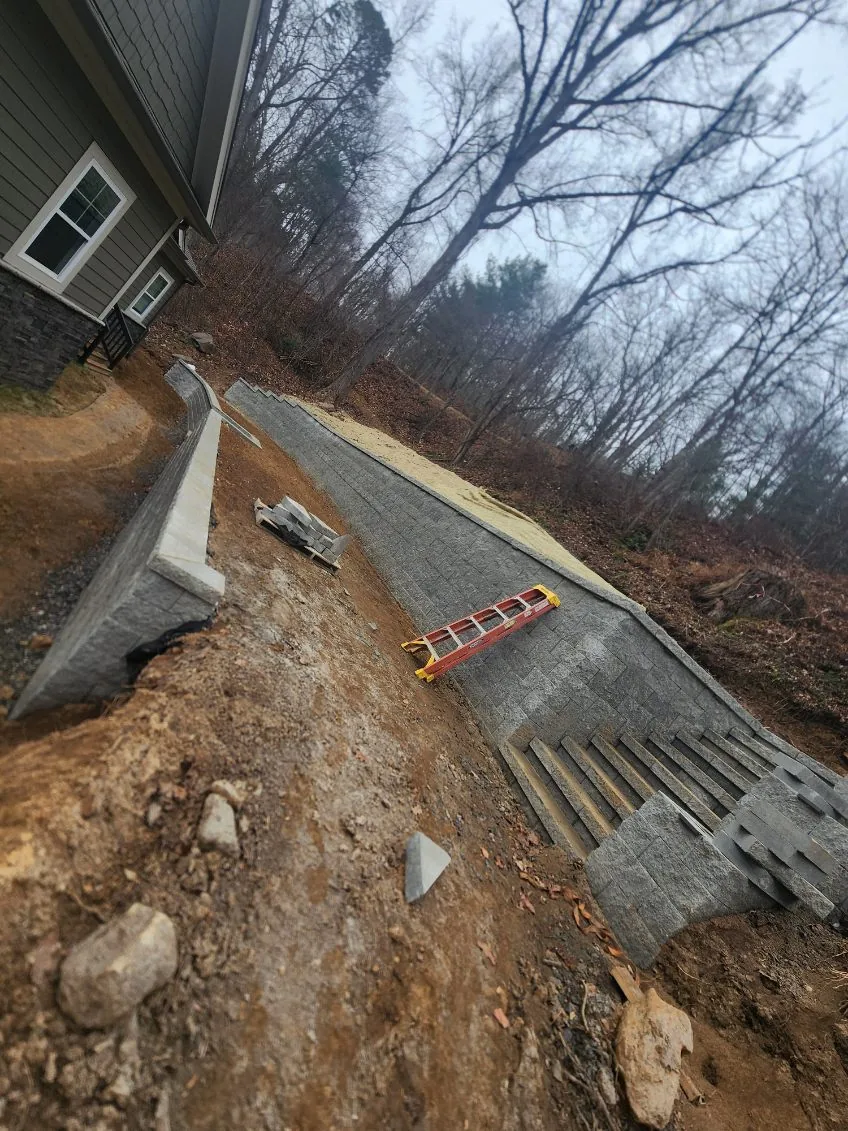
| Hillside patio with retaining | $14,000 – $28,000 | wall height, engineering, machine access |
| Flagstone or natural stone | $18,000 – $40,000+ | stone thickness, cut pattern, hand-set vs. machine |
| Drainage correction add-on | $1,800 – $6,500 | linear feet, outlet location, whether a pump is needed |
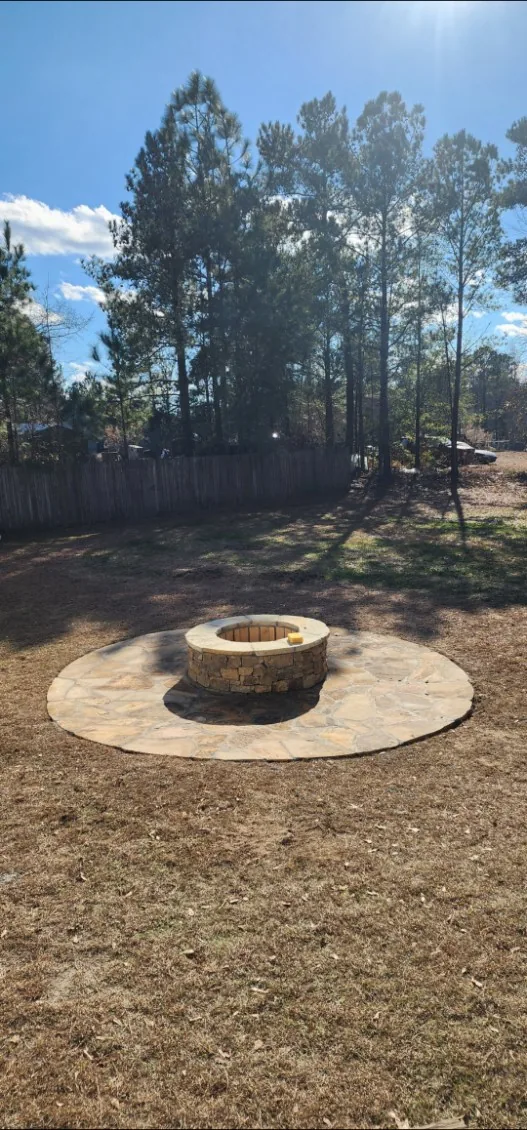
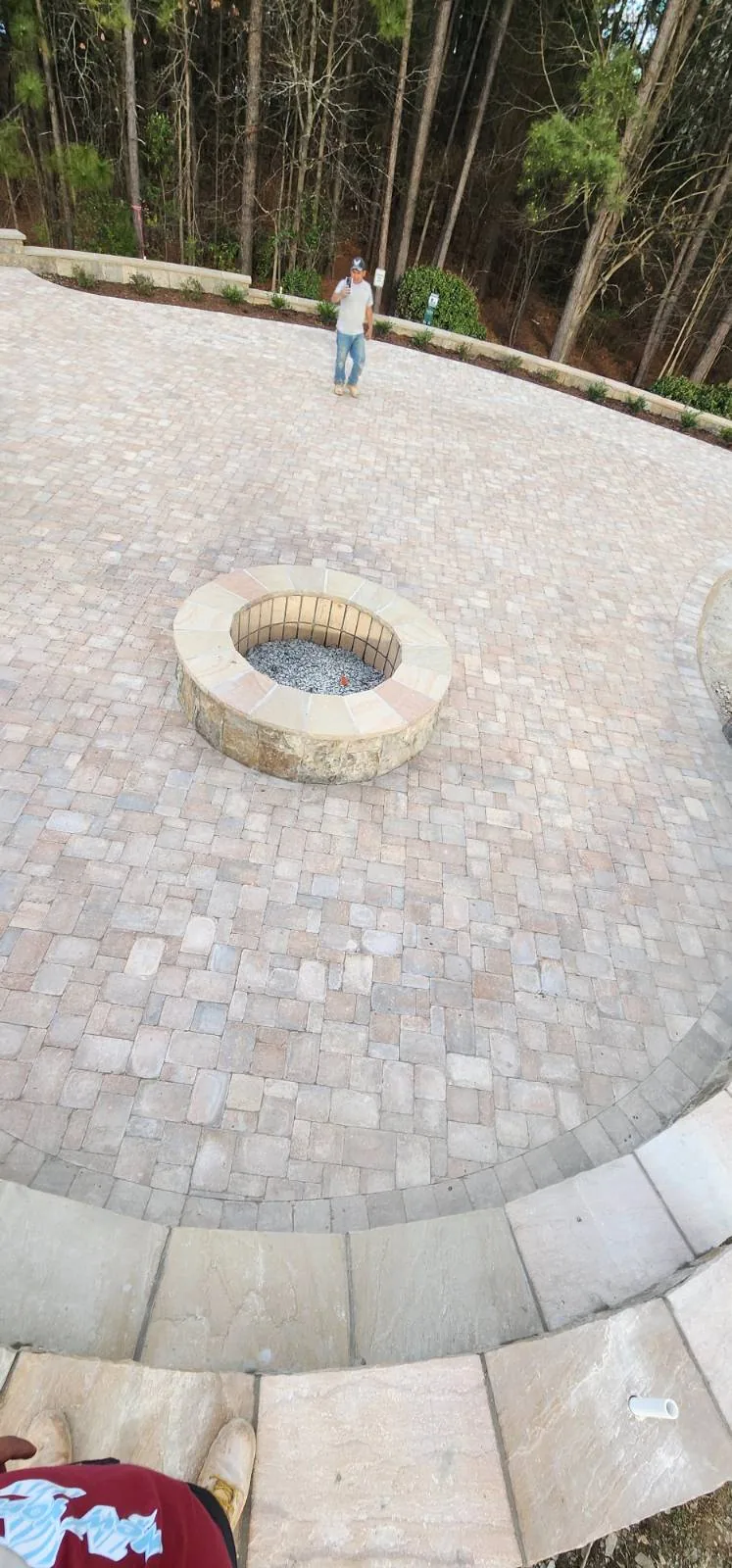
| Fire pit or seat wall | $2,200 – $7,500 | material, gas plumbed or wood-burning |
Notice the drainage line item is separate. If a bidder buries it in a lump number, you have no way to know whether it was actually designed or just smoothed into the quote. Square footage is the other lever: at these bands, a 300-square-foot patio and a 600-square-foot patio are rarely double the price, because mobilization, drainage, and spoil removal don't scale down with size. Small jobs carry a higher cost per square foot, and that's normal rather than a red flag.
Why mountain lots price differently than valley lots
A patio on a level Leicester lot and a patio on a Town Mountain slope can share square footage and differ by a factor of three. Three reasons. First, machine access: many hillside properties here can't get a mini-excavator to the build zone, so base prep and spoil removal happen by hand or by conveyor, and labor is the largest line in the job. Second, retaining: a hillside patio usually needs a wall uphill, downhill, or both, and walls over a certain height in North Carolina require engineered design. Third, spoil: dirt removed from a slope has to go somewhere, and hauling offsite in this county costs real money. The base under a paver patio is typically six to twelve inches of compacted aggregate, more on slopes, and every inch of that came in on a truck and went down by hand. If you're already budgeting a wall, our retaining wall cost guide covers that piece separately, and the national paver patio cost breakdown shows how this county sits against flatland averages.
Permits, walls, and who is allowed to build this
Many patios here stay below the county's permit threshold because they're at grade and not attached to a structure, but retaining walls above a modest height, any wall that supports a surcharge, and anything touching the house footprint usually trigger a building permit. Buncombe County enforces the residential code as adopted by the North Carolina Building Code Council, and retaining wall design standards come from the International Residential Code, which the International Code Council publishes. On the contractor side, hardscape and masonry work generally falls outside the state's general contractor licensing threshold until a project crosses a statutory dollar figure, so the person bidding your patio may not be licensed at all. That's legal. It's also why a written scope and a certificate of insurance matter more here than a license number. If your project includes plumbing for a gas fire pit or an outdoor kitchen, that work must go to a contractor licensed through the North Carolina State Board of Examiners of Plumbing, Heating and Fire Sprinkler Contractors. The statewide licensing threshold itself is set by the North Carolina Licensing Board for General Contractors. Verify before you sign, and read the flagstone patio guide if natural stone is on your list, because the base requirements there are stricter than pavers.
Reading a bid so the number stays honest
Four things separate a real bid from a hopeful one in this market:
- The drainage plan is drawn, not described. Ask for a simple site sketch showing where water enters and where it exits. If they can't draw it, they haven't thought about it.
- Base depth is specified in inches. "Proper base" is not a spec. Six inches of compacted aggregate and twelve inches are different jobs, different dollars.
- Spoil disposal is a line item. Slope lots generate a lot of dirt. If hauling isn't priced, it's coming out of something else.
- Edge restraint and joint sand are named. The cheapest way to shave a patio bid is to skip polymeric joint sand or a proper edge restraint, and that's exactly what fails first.
Compare any bid against the table above. If it lands far outside the range, make them walk you through why. Sometimes the answer is real, like a rock shelf two feet down that turns excavation into demolition. How they explain it tells you whether they've actually built on a Buncombe slope before. Ask too how they handle the wet season: crews working here often schedule base prep around fall and early spring, because compacting aggregate over saturated spring soil is how you get settlement by the following summer.