Where the money actually goes on a Leicester fire pit
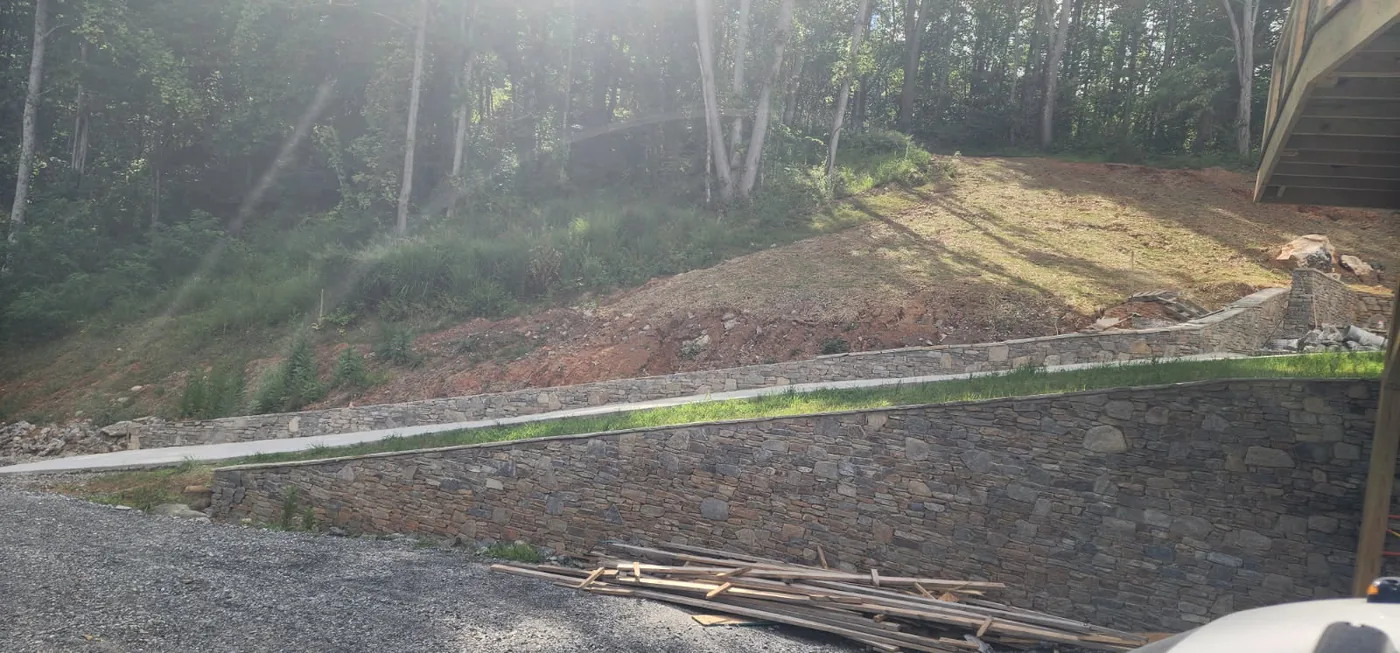
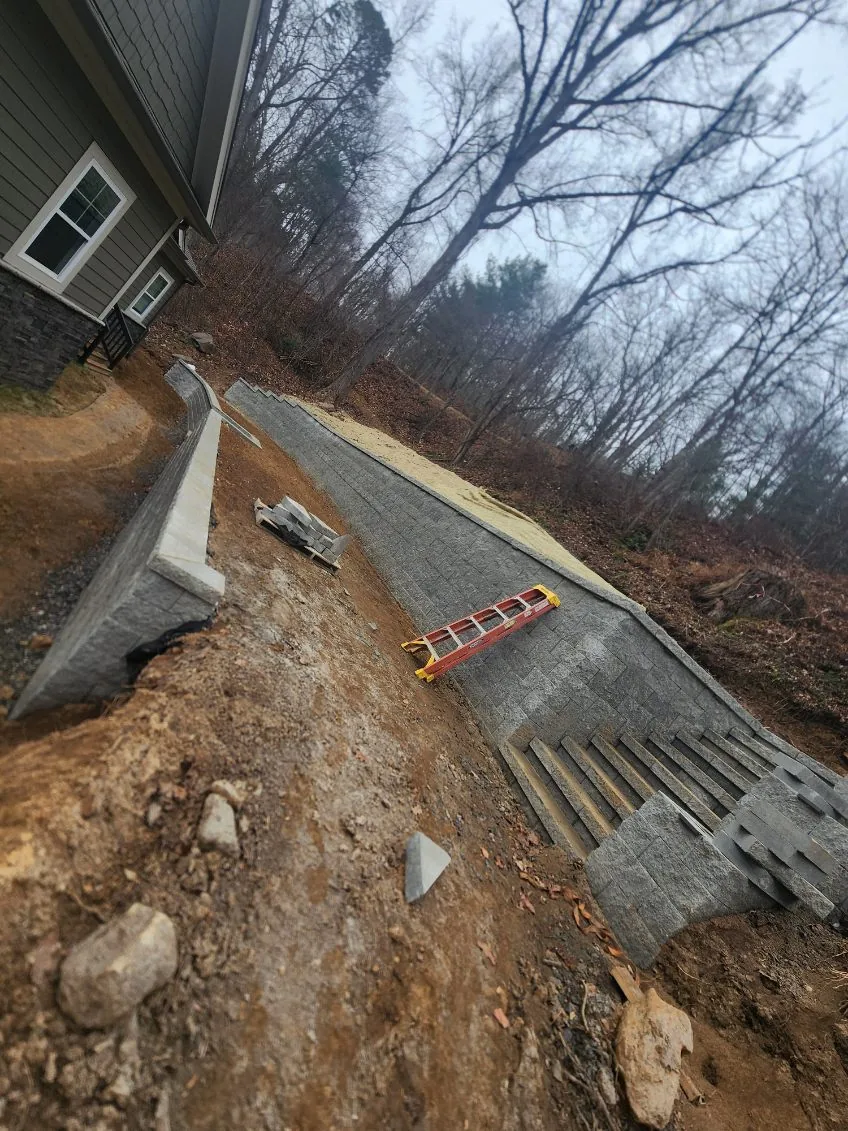
Two Leicester lots can take the same sketch and land thousands apart, and it is almost never the stone. What moves the number is what sits under and around it. On the rolling ground west of the county seat, a flat, well-drained yard takes a straightforward build: the pit, the apron, and maybe a short seating edge. A cut into a slope — common out toward the wooded ridges — adds excavation, a retaining edge to hold the grade, and drainage so the uphill side does not push water at the bowl.
The line items that price a job here, in rough order of what they change: site access and digging, because a machine that can reach a back lot without tearing up a driveway is worth money; the burn surface, since concrete, stone, and steel each carry different labor and code questions; the stone and the cap, where a dry-stacked fieldstone look sits well below a mortared veneer; safety clearances, which in tight wooded lots can force a redesign; and the seating wall, which many homeowners add later and which is often half the finished cost.
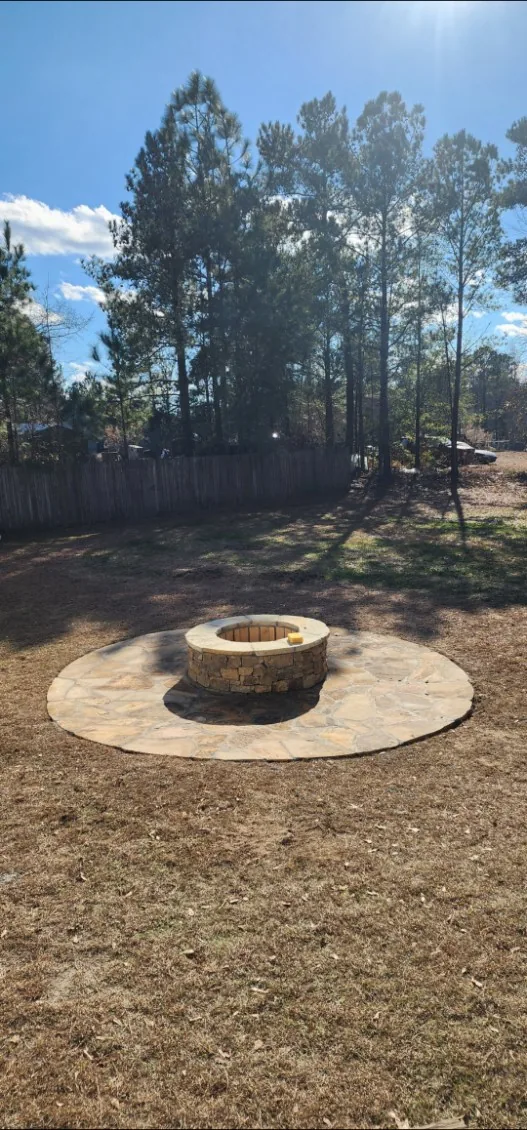
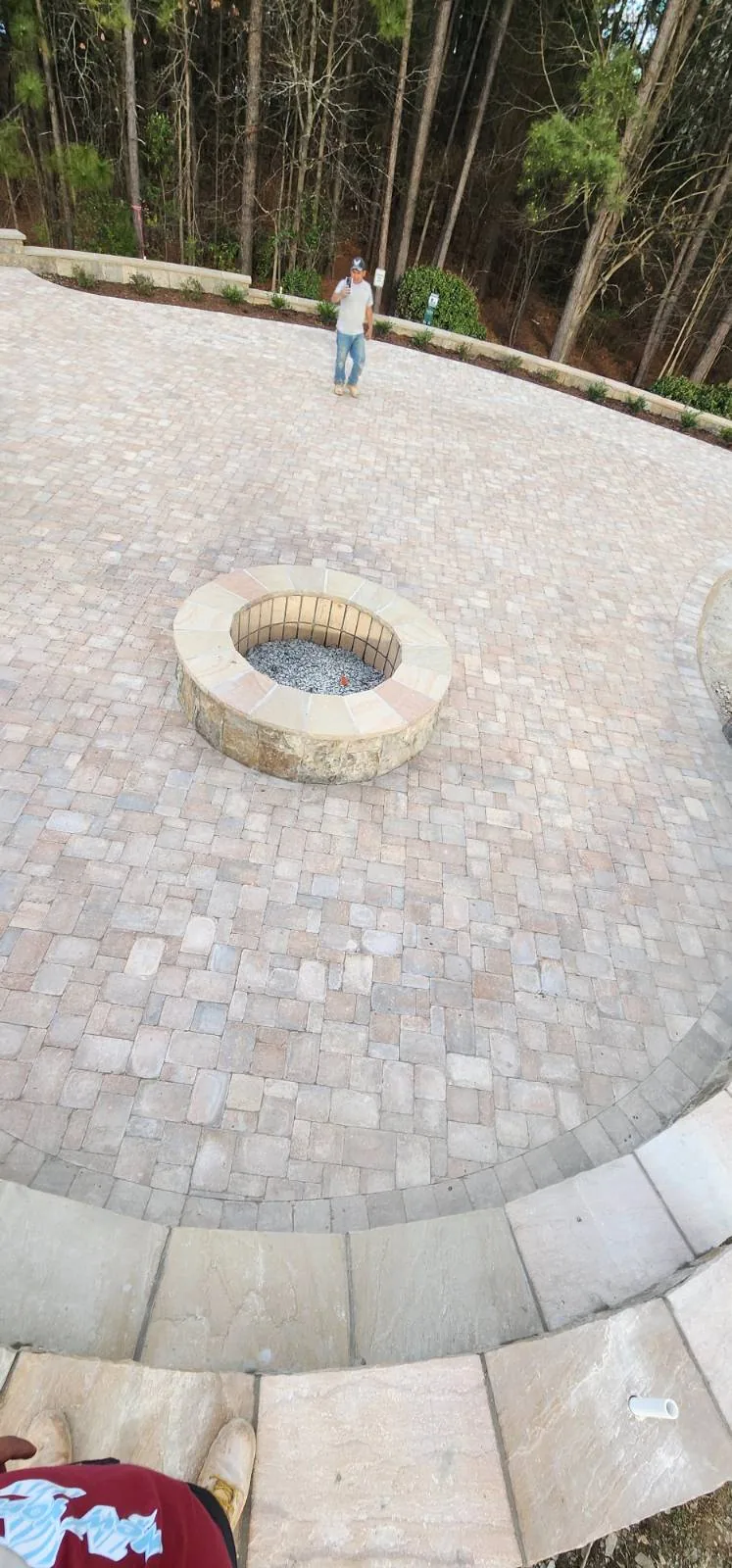
A common local pattern is the entry build — a modest ring with an apron — versus the finished hardscape with seating and a retaining edge. The first is one ticket; the second is a different project. Knowing which one you actually want before anyone quotes keeps you from comparing apples to flagstone.
What the ranges look like
Here is how the scope maps to price on a typical Leicester property. These are regional working ranges, not flat rates — the site always has the final word.
| Scope | Typical range |
|---|---|
| Simple kit or block pit, homeowner-grade, minimal site work | $600-$1,600 |
| Built-in stone pit, flat yard, no grade work | $2,400-$5,200 |
| Built-in pit with seating wall | $4,000-$8,500 |
| Sloped lot with retaining edge and drainage | $6,000-$9,800+ |
| Full hardscape: pit, wall, patio, lighting | $10,000 and up |
The retaining-wall figure is its own decision — if the pit needs an edge to hold the grade, the Buncombe County retaining wall cost breakdown covers how those line items price before you commit.
Wood, gas, and the code questions that follow
The fuel choice is not just a preference. A wood-burning pit on a wooded lot has to reckon with local burn rules and with distance to anything that can catch — roof overhangs, limbs, fencing. A gas pit skips the smoke and the burn bans but introduces a gas line, and gas work touches licensing thresholds. The North Carolina Licensing Board for General Contractors sets when a project needs a licensed general contractor rather than a handyman, and a gas line plus a masonry build can cross that line. The International Code Council publishes the model codes most North Carolina jurisdictions adopt for built-in exterior appliances and clearances.
Practical translation: decide wood or gas early, because it changes both the price and who is legally allowed to do the work. A wood pit is mostly a masonry and site job. A gas pit is a masonry job plus a plumbing and inspection job, and the two do not always live with the same contractor.
Why Leicester ground is not flat ground
Leicester sits in the western part of Buncombe County, where the county seat — Asheville — flattens out into valleys and then climbs again into wooded slopes. Lots out this way skew larger and more wooded than city parcels, with more grade change and more trees. That is the whole story of why a fire pit here is a site-work job first.
Two consequences. First, water: the same storm pattern that drives flood and storm damage across the county — 19 federally declared events over 1973-2026 — also tells you how much rain a hillside yard has to shed. A pit that ignores uphill runoff will fill or undermine. The National Weather Service tracks the rainfall and burn-condition picture that local crews plan around. Second, clearances: a tightly wooded lot may simply not have a legal spot for a wood pit without limbing trees, and that is a design constraint, not a sales upsell.
Choosing a builder without getting burned
Ask three things. Does the crew dig and grade, or subcontract it? A fire pit builder who is really a stone layer will quote low and then bill you for the machine. Second, who handles the gas line and the inspection if you go gas — get that named before signing. Third, what happens to the excavated spoils, since on a wooded lot hauling dirt off-site is a real cost line that some quotes hide.
For the design and finish options that fit a Leicester yard, the fire pit service overview walks through shapes, materials, and seating layouts. And if you have decided you want a retaining edge or a low wall integrated into the build, line up a dedicated crew through the Leicester retaining wall contractors page so the grade work and the pit are engineered as one assembly rather than two that fight each other.
One last honest note: on a sloped, wooded lot, the cheapest bid often omits the drainage and the retaining edge. That omission does not save money, it moves the cost to next spring, when the pit has settled and the bowl holds water.