Read the wall before you replace it
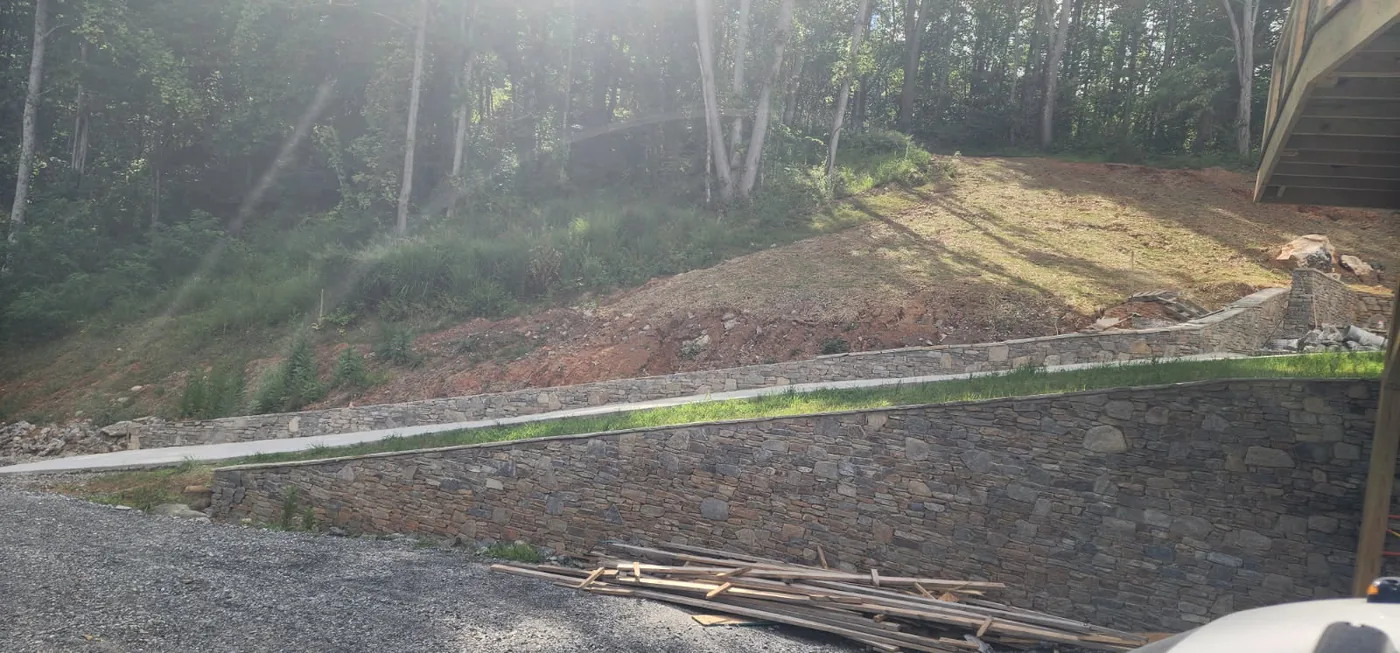
On a Buncombe County slope lot, the most expensive mistake is demolition. A stacked stone retaining wall that's leaning two inches toward the downhill neighbor may need drainage behind it and a rebuilt top course, not a tear-out. A cracked flagstone patio on a cut-and-fill yard off Town Mountain or Elk Mountain often failed because water is running underneath it, not because the stone is bad. Before any steep backyard ideas get priced, somebody should walk the site and answer one question honestly: what here is repairable, and what is genuinely at the end of its life?
That reading separates three outcomes. Cosmetic work, like re-pointing a dry-stacked wall, resetting a few flagstones, or re-grading a path, lands in the low four figures. Structural work, like rebuilding a wall that's lost its batter or replacing failed footings, is a real project but usually still less than starting over. Full replacement is warranted when courses have rotated past plumb, the base has shifted, or the original build ignored water. The terraced backyard guide walks through how a slope gets divided before any wall is priced.
What mountain grades actually demand
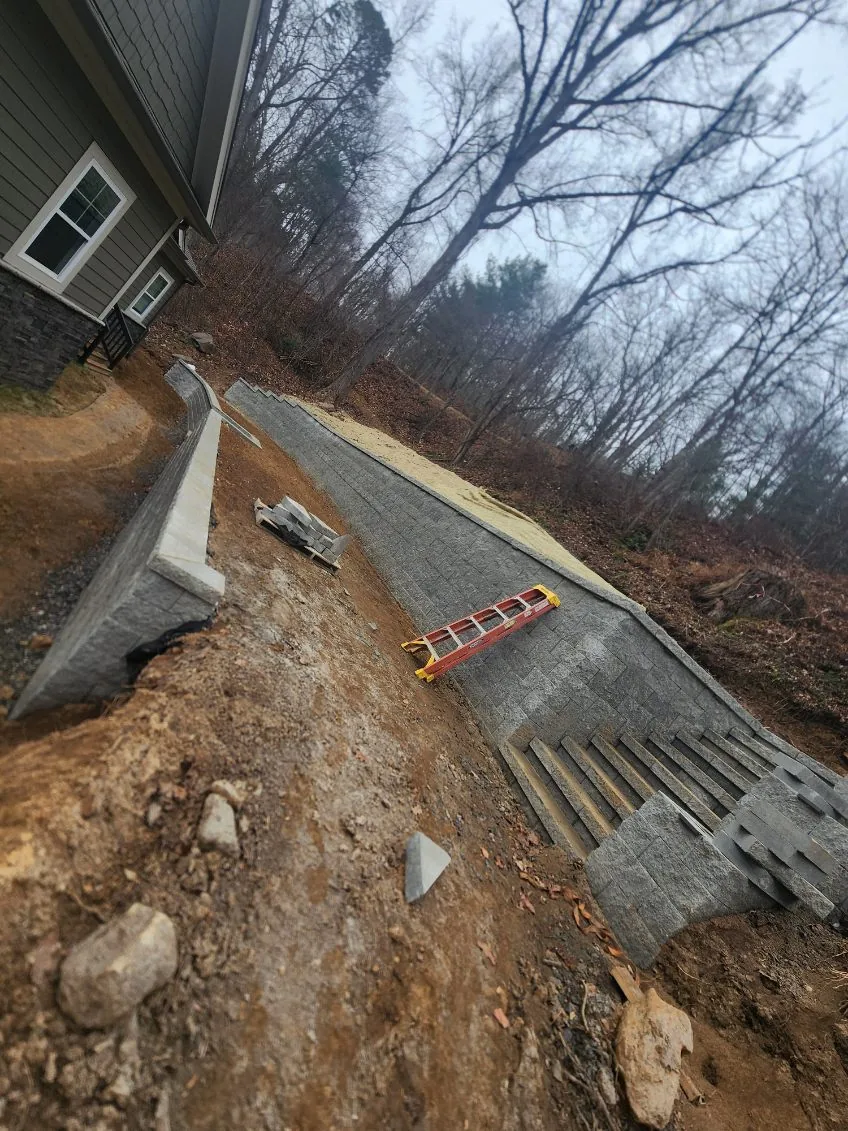
Asheville's residential terrain is not gently sloping. Lots in the older neighborhoods sit on terraced hillsides built with hand-set stone; newer ridge lots off the Blue Ridge Parkway approach forty percent grade, and machine access is often the deciding line item, not the materials. A wall that would cost one figure on a flat lot in Fletcher carries another on a slope where every pallet comes down a chute or by wheelbarrow. That's not markup, it's labor reality.
The federal disaster record explains part of why local walls fail: 19 declared events touch this county across 1973-2026, and they are overwhelmingly rain and flood family. Every one of those events tested drainage assumptions that mountain builds often got wrong. The National Weather Service tracks the rainfall that does the damage at weather.gov. If a wall or patio has moved after a wet season, water is the first suspect and the first thing to fix, because rebuilding without drainage just buys the same failure again.
Scope vs. realistic cost on a slope
Prices below assume Asheville-area labor, moderate slope, and reasonable machine or chute access. Steep lots, hand-carry sites, or jobs needing engineered retaining walls price above these bands.
| Scope | Typical range | Notes |
|---|---|---|
| Re-point or rebuild top courses of existing wall | $800-$3,500 | Repair-first work; drainage check included |
| Reset or re-lay existing flagstone patio | $2,000-$6,500 | Base correction is most of the cost |
| New terraced beds with low retaining walls | $4,000-$14,000 | Per-terrace pricing; slope grade drives total |
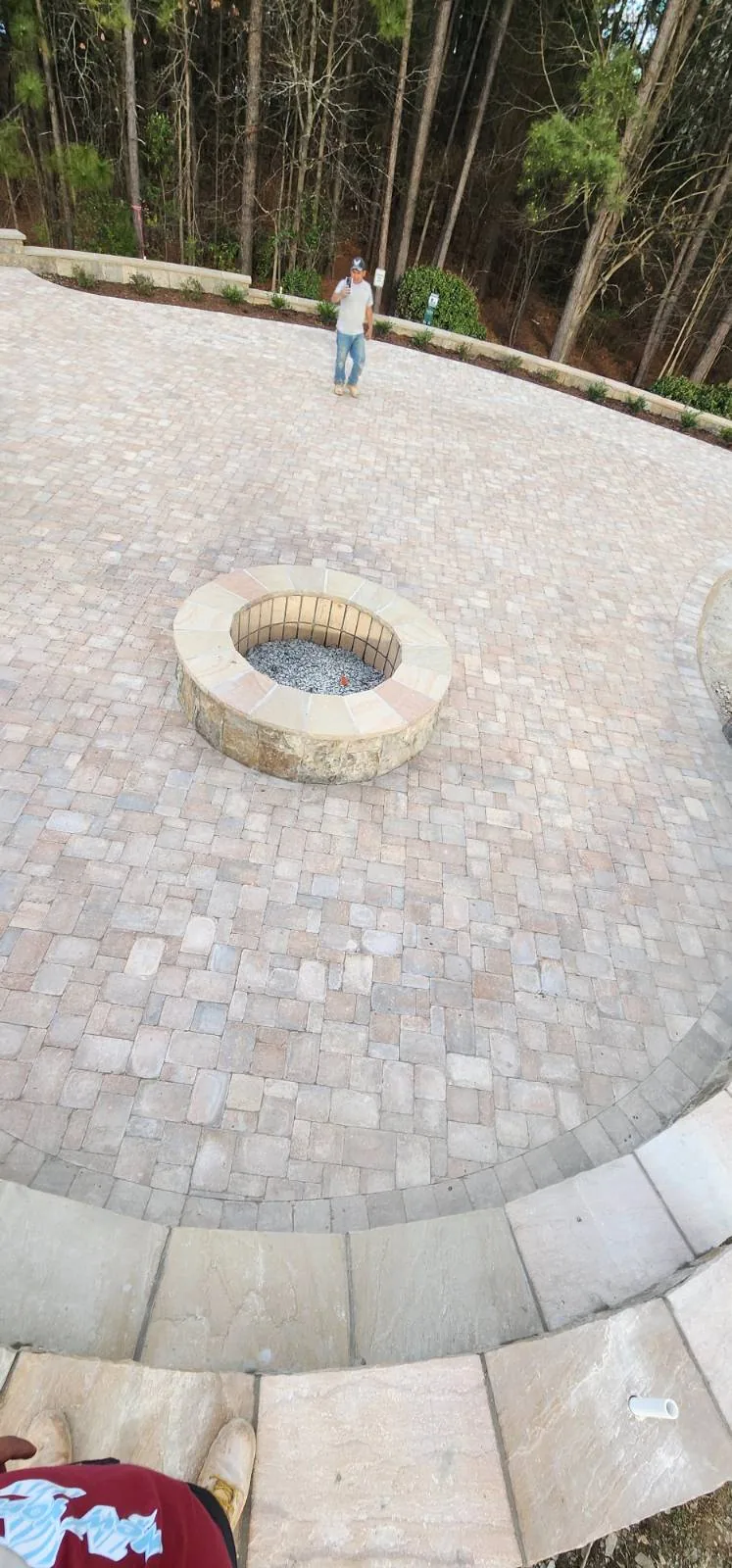
| Flagstone patio on graded or terraced area | $6,000-$22,000 | See flagstone patio guide |
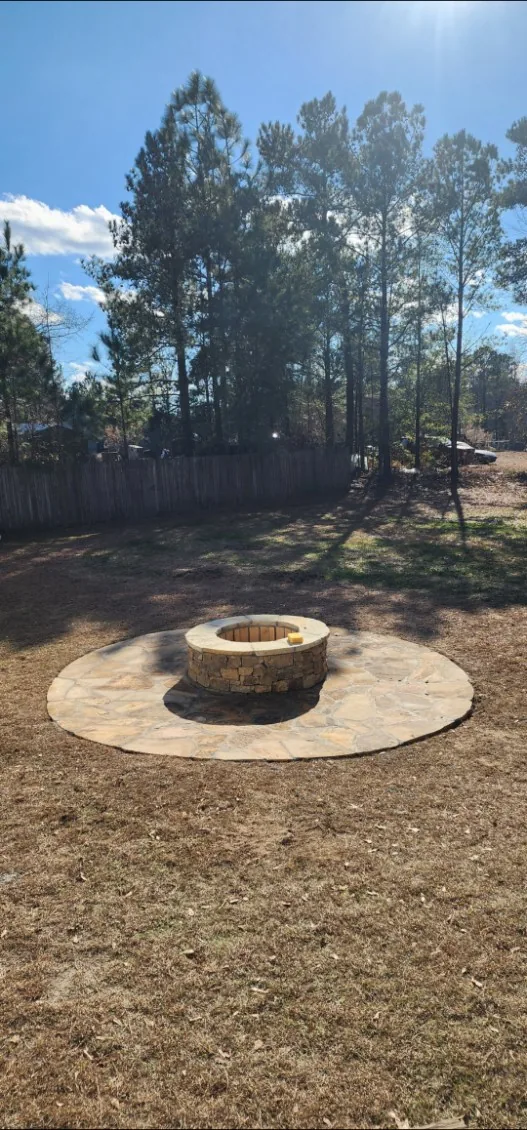
| Fire pit area with seat wall or stone surround | $3,500-$12,000 | Access and stone type move the number |
| Engineered retaining wall (tall or load-bearing) | $18,000-$45,000+ | Engineering and permit may apply |
These are regional bands, not quotes. Any number given without a site walk on a mountain lot is a guess.
Terracing, patios, and fire features done for the grade
The ideas that actually work here all follow the same logic: cut the slope into usable levels instead of fighting it. Terraces let you place a patio, a fire pit, or a garden bed on flat ground without a single monolithic wall carrying the whole hill. A stone fire pit on a lower terrace is more usable, safer, and cheaper to build than one perched at the top of a steep run. Flagstone patios laid on properly compacted base handle winter freeze-thaw cycles far better than pavers set on sand, which is why most mountain patios here are stone.
Two rules separate good builds from expensive re-dos. Drainage is designed first: every terrace needs a way for water to leave, or the first big storm undermines it. And walls get built to code: North Carolina's residential code and the state fire marshal's code services office at ncosfm.gov set the structural requirements. For taller or load-bearing walls, the NC Licensing Board for General Contractors at nclbgc.org sets when a licensed general contractor is required by law.
Plan the project around access and water
On a steep Asheville lot the project schedule and cost both hinge on access. If a mini-excavator can't reach the work area, everything moves by hand and every ton of stone costs more to place. Get that answered before design. Water comes second. Where does the roof drain, where does the uphill neighbor's runoff land, and where does your new terrace send what it collects? Answer those three questions and the rest of the project becomes straightforward.
Then decide the scope in stages. Fix what's salvageable first. Add one terrace, one patio, or one fire feature, and see how it feels through a full wet season before committing to the next level. Mountain yards reward patience that flat lots don't require.