How a stone job actually runs, week by week
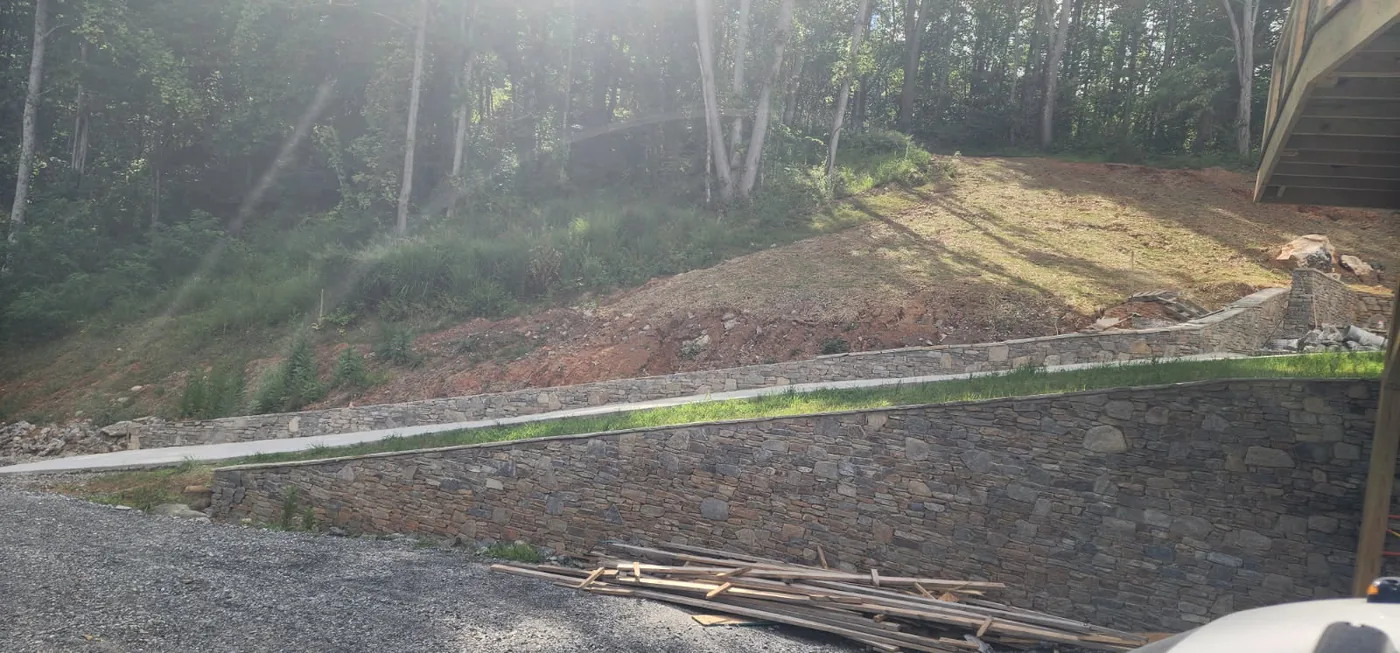
A real stone masonry job in Hot Springs starts weeks before the first stone is set. First comes the walk: reading the slope, finding the springs that run under half the properties above the river, checking what the existing wall was built on. Second comes layout — string lines, batter, and a footing depth that accounts for how Madison County ground freezes and thaws. Third comes the footing pour, which needs a cure day or two before anything heavy sits on it. Only then does stone start moving.
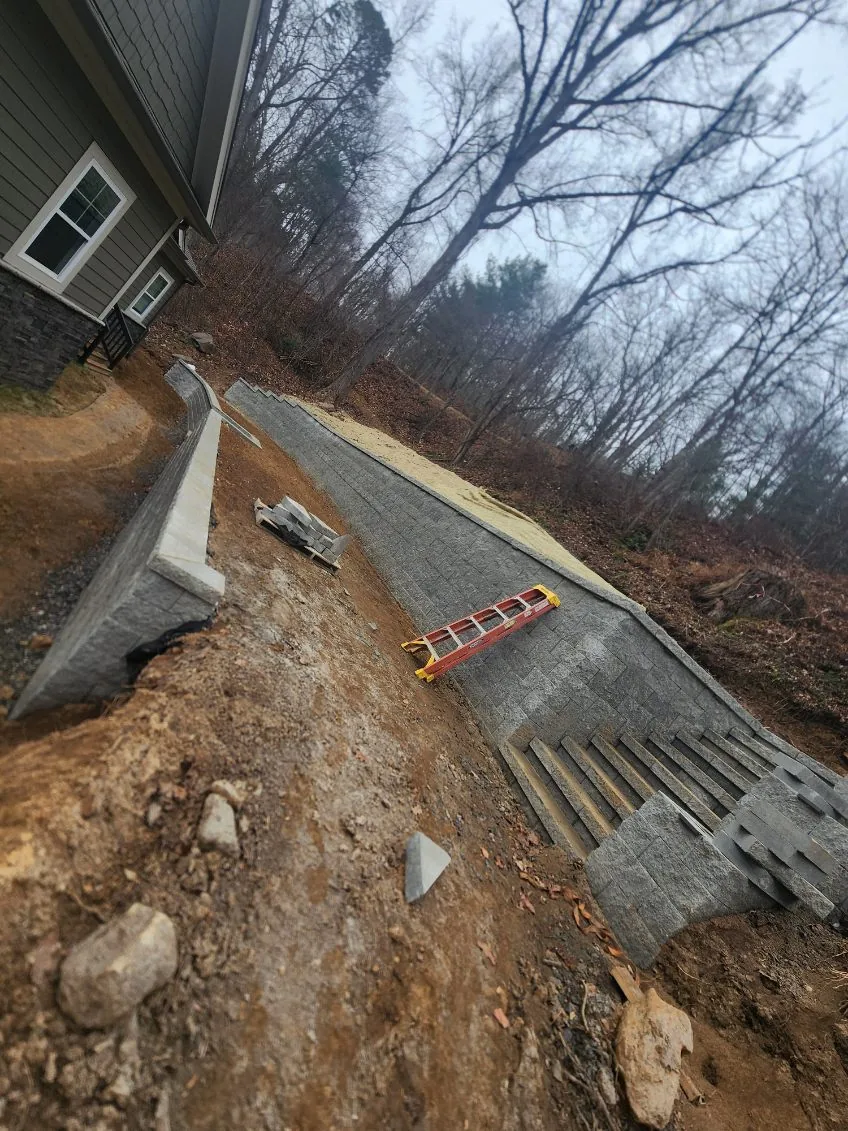
For a rubble or dry-stack wall under four feet, the build itself is often five to ten working days for a two-person crew. A taller engineered wall with geogrid, drainage stone, and a footing inspection can stretch to three or four weeks. Veneer work on a chimney or foundation face is faster — usually three to six days — because there is no soil to hold back. The honest schedule question is always the same: is this wall holding dirt or just looking good? Walls that hold dirt take longer, cost more, and deserve the time.
Sequencing matters more here than in flatland work because the terrain forces decisions. In a downtown Hot Springs block, the staging area might be a narrow alley behind a storefront — stone comes off a truck one pallet at a time and moves by hand truck, which adds days to a veneer job that would be quick on an open lot. On a hillside off Highway 25/70, the crew may spend the first day just building a safe path for the mini-excavator, and the last day restoring the slope they disturbed. Neither of those tasks shows up in a photo of the finished wall, but both are part of the week-by-week reality. Material delivery is its own scheduling problem: local fieldstone often arrives loose on a dump bed and has to be sorted on site by size, while Tennessee flagging tends to come palletized and banded, which is faster to place but costs more per ton before it ever reaches the slope. A crew that knows this terrain budgets for sorting and staging as real line items, not as time they hope to make up later.
What drives cost on a Hot Springs slope
The gorge terrain is the single biggest price mover. A wall that sits ten feet from the road with dump-truck access is one price; a wall at the back of a hillside lot off Highway 25/70, where every stone moves by wheelbarrow or mini-excavator, is another. Stone type matters too — local fieldstone and Tennessee flagging cost differently than imported bluestone. Drainage, footing, and geogrid aren't upsells on a retaining wall; they're the reason it's still standing in five years.
Access changes the math in ways that are easy to underestimate. A slope lot where the crew can park a truck and chute stone down to the wall line might run a normal rate, while a lot where the only path is a switchback trail wide enough for a wheelbarrow can add days of labor that have nothing to do with the stone itself. Tree cover matters too — root systems on mature hardwoods above the French Broad often run directly through the wall line, and cutting them is a decision with its own consequences for slope stability. When a quote varies from another by a wide margin, the difference is almost always access, drainage scope, or how much soil the wall actually holds back, not the quality of the stone.
Scope and price ranges
These bands are typical for Madison County and the surrounding mountain counties — treat them as a planning range, not a bid. Every wall gets its own number once someone walks the slope.
| Scope | Typical range |
|---|---|
| Stone veneer, chimney or foundation face (per sq ft) | $28–$55 |
| Dry-stack garden wall, under 3 ft, easy access | $2,800–$6,500 |
| Mortared retaining wall, 3–5 ft, with footing and drain | $6,000–$14,000 |
| Engineered retaining wall over 5 ft, geogrid and inspection | $14,000–$32,000+ |
| Stone steps, set and mortared (per step) | $350–$850 |
| Patio or walkway, dry-laid flagstone (per sq ft) | $18–$38 |
The footing, drainage stone, and geogrid are where cheap quotes hide. A wall bid without a drainage line item on a Spring Creek hillside is incomplete, not thrifty. See the fuller county breakdown at retaining wall cost in Madison County, and for the technical side of what a proper wall install includes, the retaining walls guide covers footing, batter, and drainage in detail.
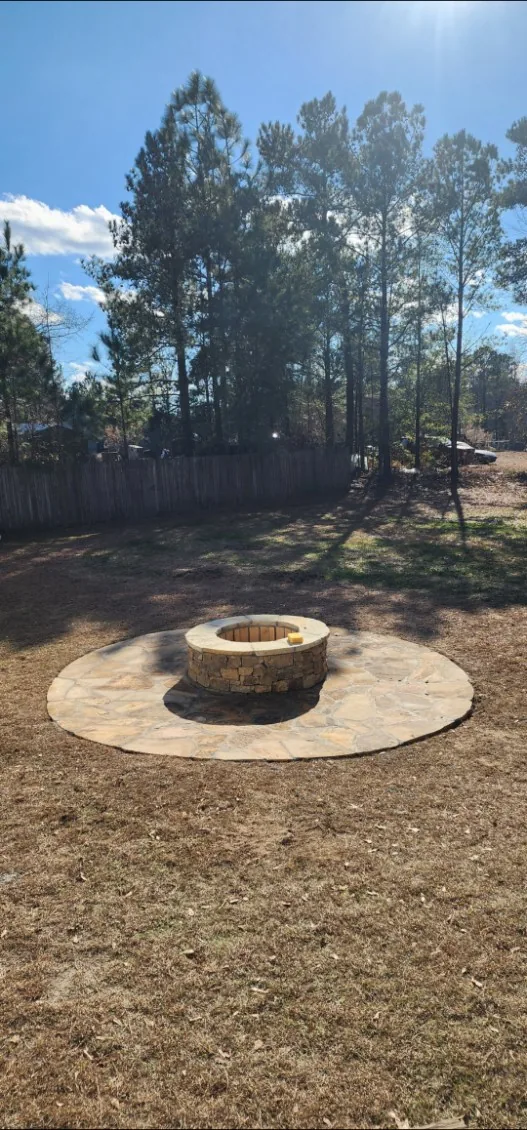
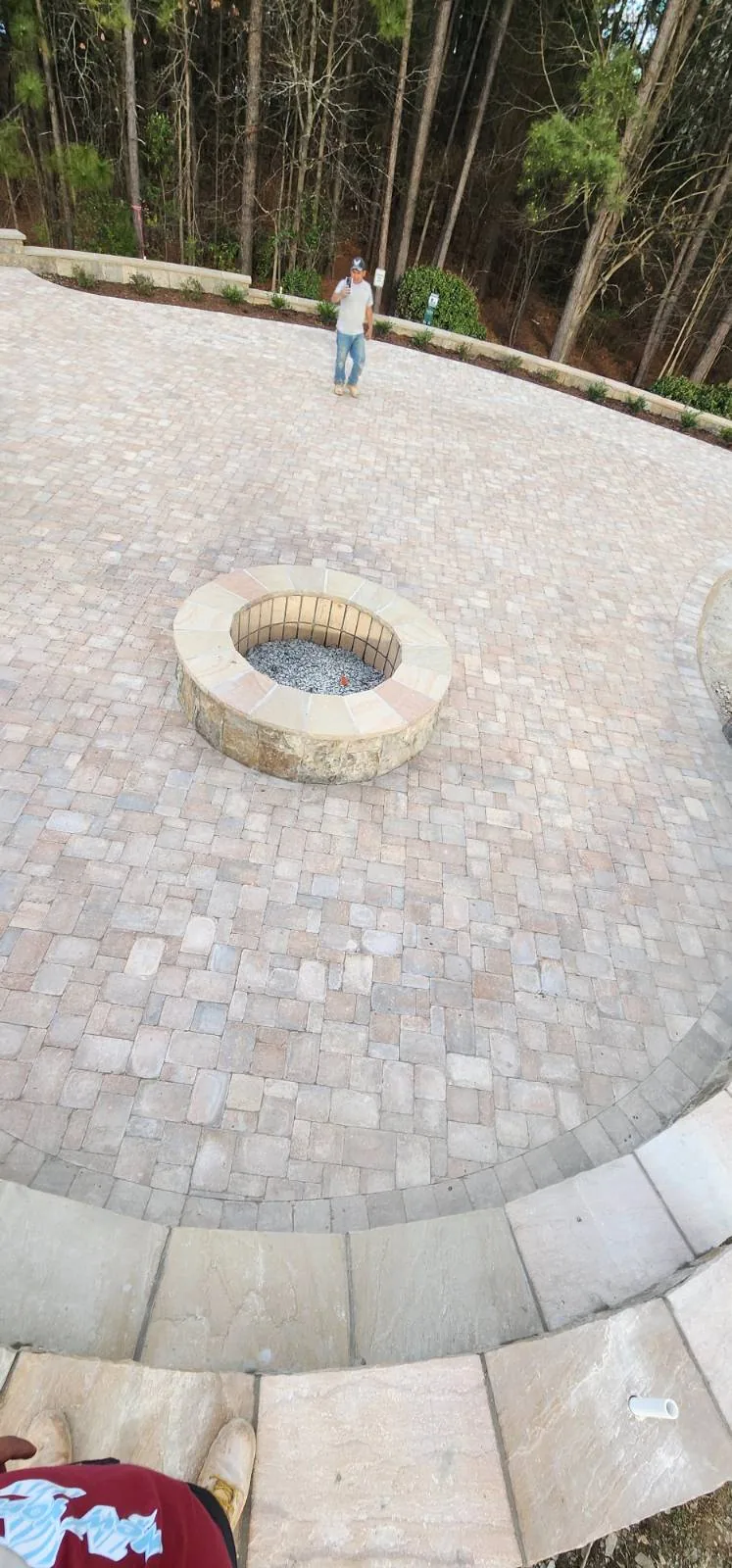
Steps and walkways deserve a note of their own in this terrain. A set of mortared stone steps on a slope is often the smallest line item on the page but the one that most changes how a property feels day to day — it's the difference between a usable side yard and a hillside nobody walks on. Dry-laid flagstone patios work well here too, provided the base is compacted and graded to shed water, because a patio that ponds after a mountain storm will heave within a season or two. These smaller scopes are also a reasonable way to start a relationship with a mason before committing to a full retaining wall, since they use the same stone, the same footing logic, and the same drainage thinking at a fraction of the scale.
Water, weather, and why mountain walls fail
Madison County's federal disaster record tells the story: 21 declared events touch this county across 1978-2026, overwhelmingly flood and storm family. Every one of those events sent water at walls that were built for a drier assumption. Hydrostatic pressure behind a wall is what pushes it over — not the stone, not the mortar. That's why drainage gravel, a weep path, and a footing below frost line aren't optional on a hillside. The National Weather Service tracks the rainfall and flood patterns that drive this, and the NC Department of Environmental Quality governs how stormwater and stream-adjacent work is handled in the French Broad watershed. If your wall is within the floodplain or near a stream, that's a permitting question before it's a masonry question.
The pattern repeats in predictable ways. Along the French Broad and its feeder creeks, water arrives fast after a mountain storm and leaves faster, which means the wall has to handle a surge, not a slow soak. On north-facing slopes above town, freeze-thaw cycles work on the same joints all winter, opening them a little more each season until mortar gives way and stones shift. Walls built without a clear weep path collect water until the soil behind them is saturated, and saturated soil is heavy soil — heavier than most people picture when they look at a wall from the road. Owners often notice the first symptom as a slight lean or a bulging face, and by that point the footing has already moved. Catching a wall in year two and rebuilding the drainage is far cheaper than replacing the wall in year six, which is why the honest advice on this terrain is almost always to overspend slightly on drainage and underspend on decorative stone.
Sequencing a project the right way
The order that keeps a stone job from going sideways: walk and measure, then design and (if needed) engineering, then permit, then footing, then drainage, then stone, then cap and cleanup. Skipping design to "save time" is how a wall gets rebuilt twice. Skipping drainage is how a wall leans by year three. On hillside work in Hot Springs, the drainage plan often costs more than the stone — that's normal here, and a crew that tells you otherwise hasn't built on this terrain.
For walls over the state's threshold, general contracting rules apply — the NC Licensing Board for General Contractors lays out when a licensed GC is required versus when a specialty masonry contractor can carry the job. If the wall retains more than a few feet of soil, or sits near a structure, assume you need the license and the engineering letter. And if you're comparing crews, the retaining wall contractors in Hot Springs page covers what a real bid includes versus a verbal estimate.
Where the sequence gets compressed is on small veneer and step jobs, which can often skip the engineering step entirely. Where it stretches is on any wall that touches a property line, a shared driveway, or a structure — those jobs may need a survey, a neighbor conversation, or a letter from an engineer before a single stone moves, and that lead time is real. In Madison County, the county seat is Marshall, and Hot Springs sits on the Madison side of the French Broad; work in and around town often involves older structures and existing stone that predates modern code, which means part of the sequencing is simply deciding what to keep and what to rebuild. A mason who walks the property with you and talks through that decision before quoting is giving you the most valuable part of the estimate.