Why Mars Hill walls fail where flatland walls don't
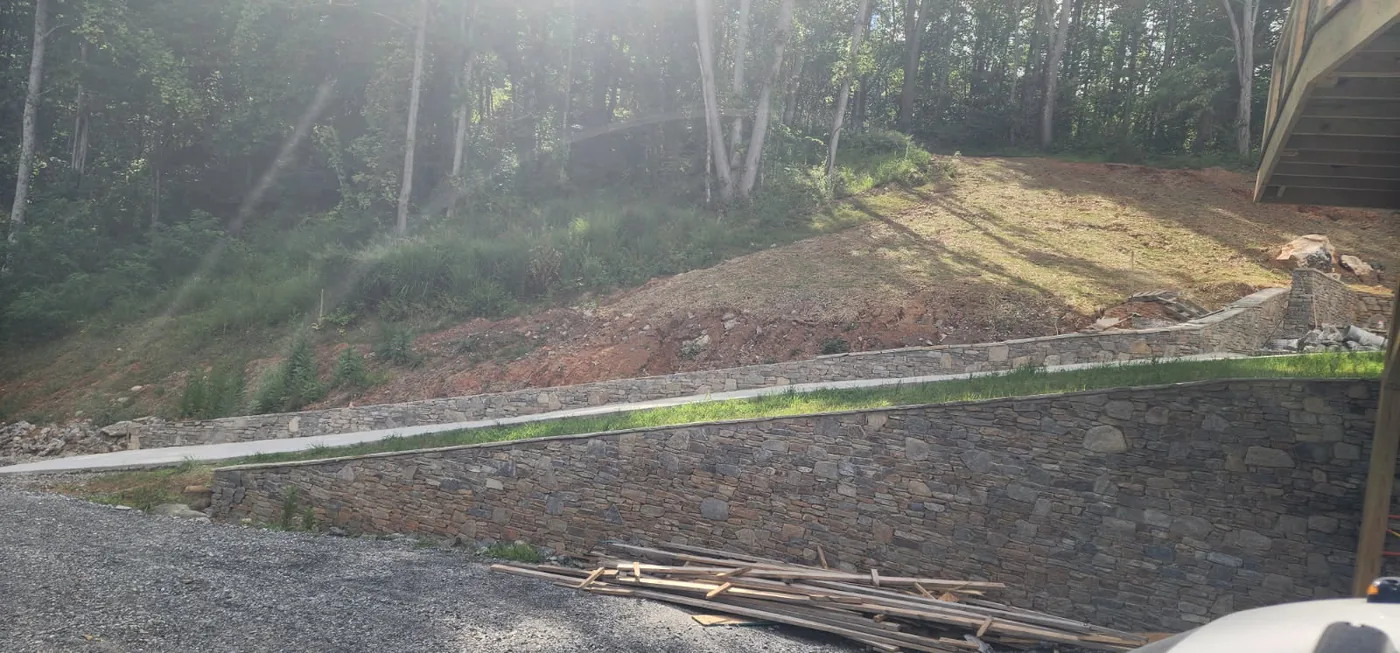
Drive the ridge roads north of the Mars Hill College campus and you'll see the same pattern on lot after lot: a house cut into the slope, a steep bank left behind it, and a low stone wall holding back a wedge of red clay that was never designed for the water coming off the uphill neighbor. Madison County terrain rewards masonry that drains. It punishes masonry that doesn't.
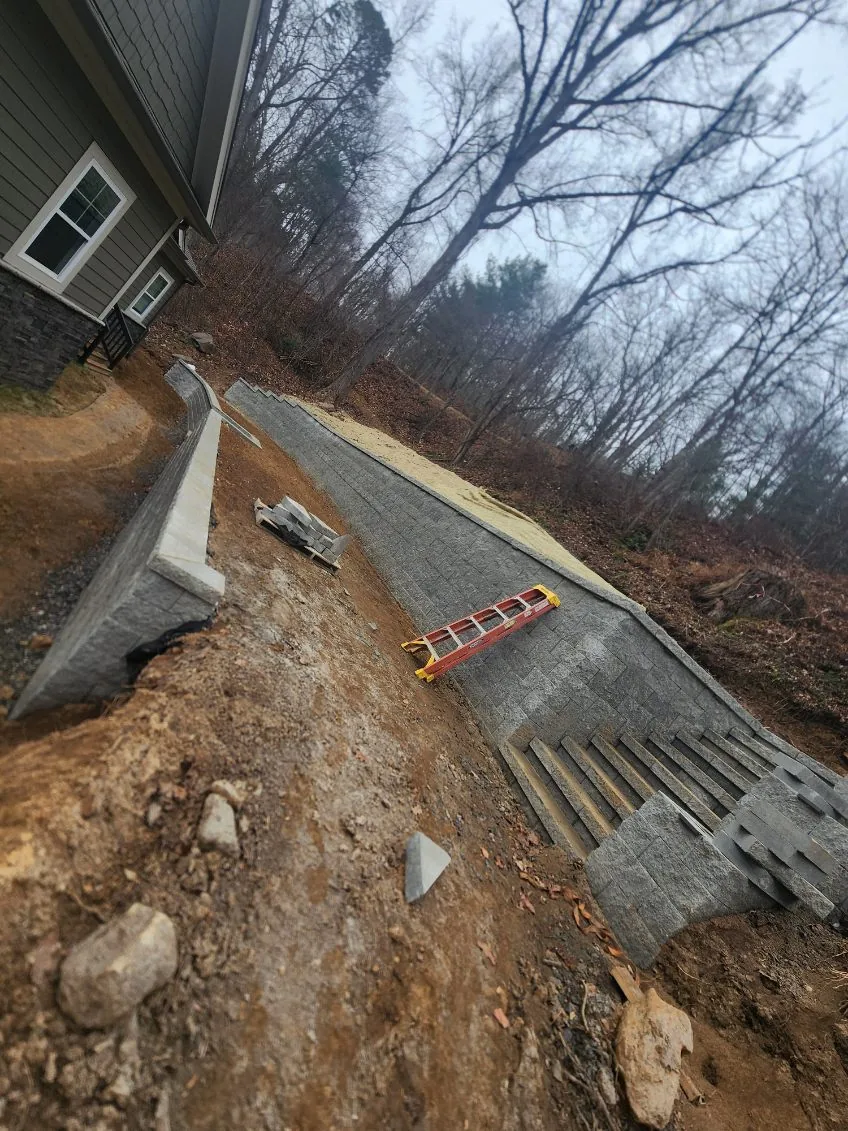
The lots here are narrow and terraced, which means equipment can rarely reach the back of the property. That access problem, not the stone, is what separates a quote you can trust from one that surprises you. Boulders, stairs, and split-level walkways get built by hand or not at all.
Beyond the driveway, the physical reality of a Mars Hill wall is different from a flatland wall in three specific ways. First, every wall here is also a dam: water from the uphill side, from roof downspouts, and from saturated clay during a multi-day rain event pushes against the back face with real force. Second, the soils — a mix of residual clay over weathered rock and, in places, colluvium on the steeper slopes — hold water rather than shed it, so drainage stone and a perforated pipe aren't optional. Third, frost depth on these ridges penetrates deeper than most homeowners expect, which is why footings on a mortared wall need to go below the local frost line or the first hard winter will lift the base.
The cut banks behind these houses are the single most common failure point. Cut a bank, leave it bare, and the next wet spring will move it. A properly built retaining wall intercepts that movement and routes the water — but only if the designer thought about where the water goes after it passes through the drain. On a ridge lot, that often means daylighting the pipe at a lower elevation on the property, which in turn may require a swale or a dry creek bed to keep the discharge from becoming the neighbor's problem.
A field of native stone, three trades
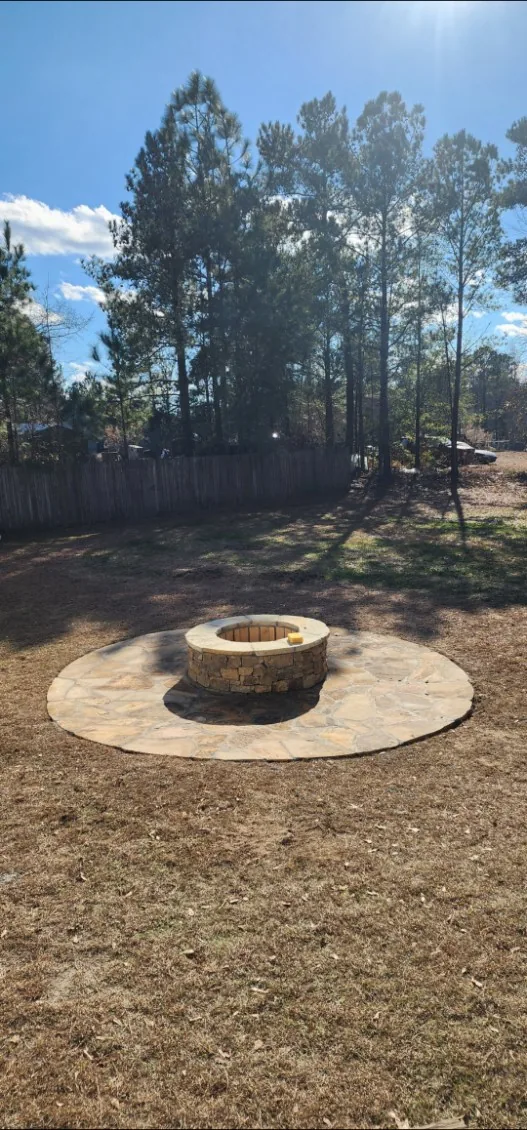
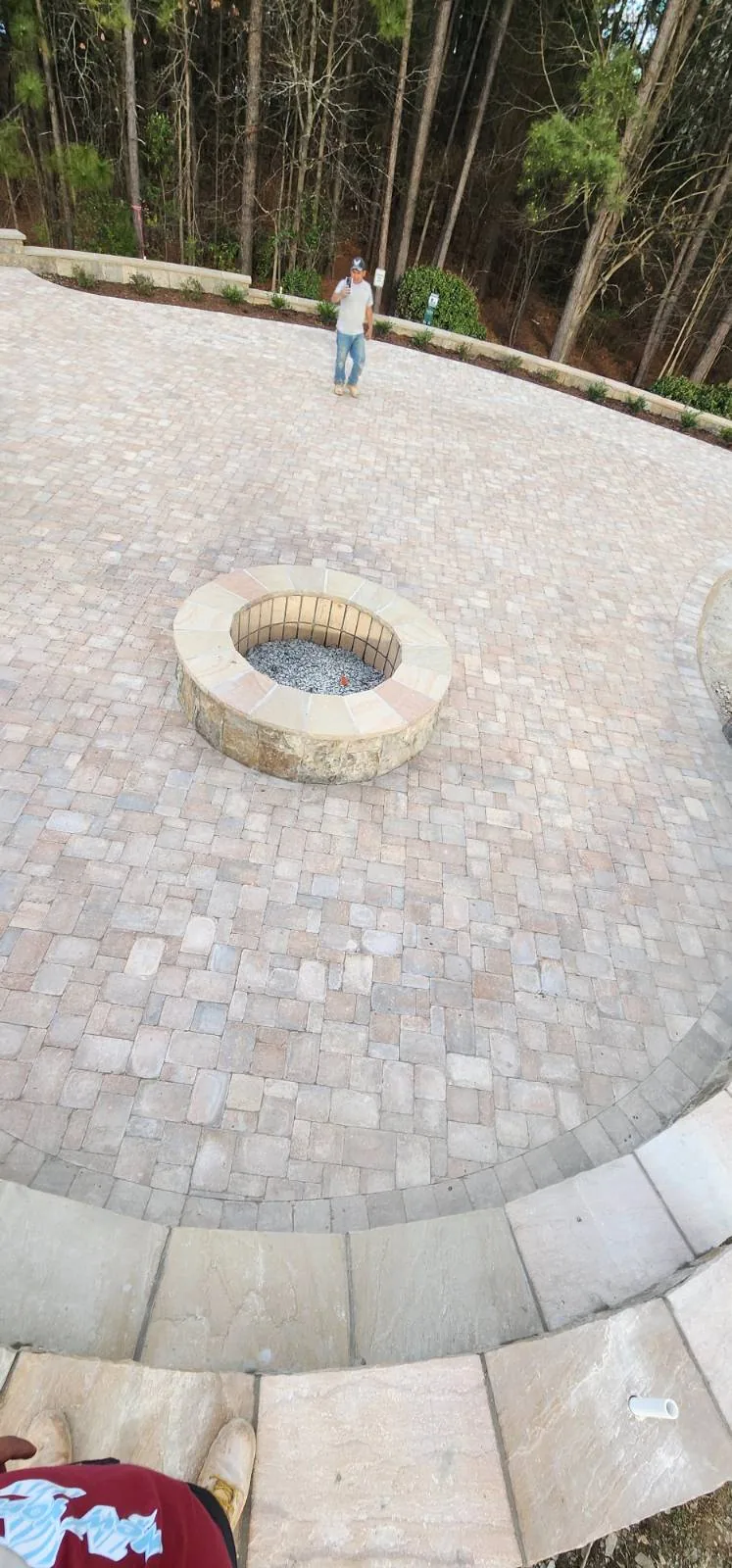
Mars Hill masons do three genuinely different jobs and the skills don't fully overlap. Dry-stack and mortared retaining walls are structural: they hold soil and must shed water. Veneer — the stone facing on a chimney, porch pier, or foundation wall — is cosmetic and depends on proper ties and flashing, which is where most veneer failures originate. Walkways, steps, and patios are hardscape and fail mostly from frost heave and poor base compaction, both of which Madison County winters test every year.
Ask any crew which of the three they do most, and ask for a project you can visit at roughly the same slope and access as yours. A stone mason Mars Hill NC homeowners hire well should answer that without hesitation.
The stone itself is a real variable. Local fieldstone, dug from the ridges and creek bottoms around Mars Hill, is irregular, often round-ish, and best suited to dry-stack or a rubble-style mortared look. Tennessee ledge stone and the quartzite-type material that gets trucked in from the mountains to the west gives you flat bedding planes, which is what a dry-stack wall wants because the stones stack and lock against each other rather than sitting on mortar points. A quote should say which material the mason intends to use and where it comes from, because the labor cost per square foot moves with the stone's shape.
Veneer deserves its own warning. On a chimney or a porch pier in this county, the failure almost never starts with the stone — it starts with the flashing detail at the top, the weep system at the base, or the lack of a drainage plane behind the scratch coat. A homeowner can't easily see any of that after the job is finished, which is why the references matter: drive past a chimney veneer the same crew installed five winters ago and look for efflorescence or spalling at the base.
The Mars Hill price picture
Local pricing runs a bit above the Asheville metro because trucking stone and hauling off spoil on ridge roads costs time, and hand labor replaces machinery on tight lots. View the full retaining wall cost breakdown for Madison County for a working table, and see Mars Hill retaining wall contractors if your project is purely structural. For the broader material and drainage detail, the retaining walls guide covers base depth, drainage stone, and geogrid.
| Scope | Typical range |
|---|---|
| Dry-stack wall, under 3 ft, good access | $55-$95 per sq ft of face |
| Mortared wall, 3-6 ft, with drainage | $85-$150 per sq ft |
| Engineered wall over 4 ft (design fee included) | $150-$260 per sq ft |
| Stone veneer on chimney or porch pier | $2,800-$7,500 per face |
| Stone steps, 3-6 risers | $1,200-$3,800 per flight |
| Flagstone walk or patio, 200-400 sq ft | $12-$30 per sq ft |
| Drainage behind existing failing wall | $1,800-$6,500 |
Two pricing rules apply here that don't in flat country: plan review adds cost when a wall over four feet tall requires engineering, and slope access can add 20-35% versus a drive-up job. Treat any Mars Hill quote missing drainage line items as incomplete rather than cheap.
A homeowner can sanity-check a quote by walking the site with the mason and asking where the excavator will sit, where the spoil pile will go, and where the drain discharges. If the mason can't answer those three on the spot, the bid is probably a guess. On a ridgetop lot with no side yard, the difference between a machine-accessible job and a wheelbarrow job is often thousands of dollars, and that line item should be visible in the quote rather than buried.
Water, code, and the wall that holds
Federal disaster history is the honest starting point for any hillside property in this county: 21 declared events touch Madison County spanning 1978-2026, and the overwhelming majority are storm and flood family events. Every one of them pushed water at retaining walls and foundation veneers built for a drier assumption. Before a mason quotes you stone, the grading question must be answered — where the uphill runoff goes, where the downspouts discharge, and whether the wall has a drain.
Two authority rules matter for Mars Hill projects. Walls above a certain height and retaining soil are treated as structures under the code framework published by the International Code Council, which is why engineered drawings get requested on taller banks. And if your site touches a stream, creek, or steep slope above a waterway, sediment and stormwater rules from the N.C. Department of Environmental Quality can require a plan before ground is broken. Masonry contractors who cross project-size thresholds must be licensed by the N.C. Licensing Board for General Contractors, so ask for that credential on any wall job above the threshold.
The weather context is not abstract. The National Weather Service issues flash flood and high wind products for the mountain counties, and a wall built without an overland relief path will eventually see water go over the top rather than through it. Designing for that worst-case path — a swale, a channel, a reinforced overflow — is what separates a wall that survives a hundred-year storm from one that leans after a wet week.
Hiring a mason in this market
Three Mars Hill-specific checks. First, ask how they drain a wall on a cut bank — if the answer is a weep hole and nothing else, keep looking. Second, ask what stone they'll actually use: locally quarried fieldstone and Tennessee ledge stone behave differently and weather differently, and a quote should say which. Third, ask whether they carry their own insurance and can show you a certificate, because hillside access carries fall and rollover risk that uninsured crews pass to you.
Then ask for two addresses you can look at in person. On ridge roads, the truth is visible from the street. When your project crosses into structural retaining work, the safe default is a dedicated engineering review before a single stone is set, which is what every good contractor already expects.
A few more specifics worth asking in Madison County. Does the crew pull a permit when one is required, or does it leave that to the homeowner? On structural walls, the permit and the inspection record are part of what protects resale value. Does the mason stage the work around the wet season? Starting a footing in a rainy stretch on saturated clay is the most common way a good design ends up with a bad result. And does the bid separate labor, stone, drainage materials, and excavation so you can see where the money goes — because the cheapest line in a Mars Hill masonry quote is often the one that gets omitted.
Finally, expect scheduling to be seasonal. Late spring and early fall fill first; a wall that leans after a storm gets prioritized because it's a safety issue, not a cosmetic one. If your timeline is flexible, booking in a slower window can improve both the quote and the crew's attention to detail.