Where the water comes from on a Swannanoa lot
Most Swannanoa properties sit on ground that was shaped by the river long before anyone built on it. The valley floor between the Swannanoa River and the lower slopes of the Black Mountains collects runoff from every direction, and the hillside lots on the Bee Tree and Riceville sides send their stormwater down toward the valley whether the ground below is ready or not. That is the fact that decides almost every hardscape here: the patio is not the project, the drainage is the project, and the stone is what you see when the drainage is done right.
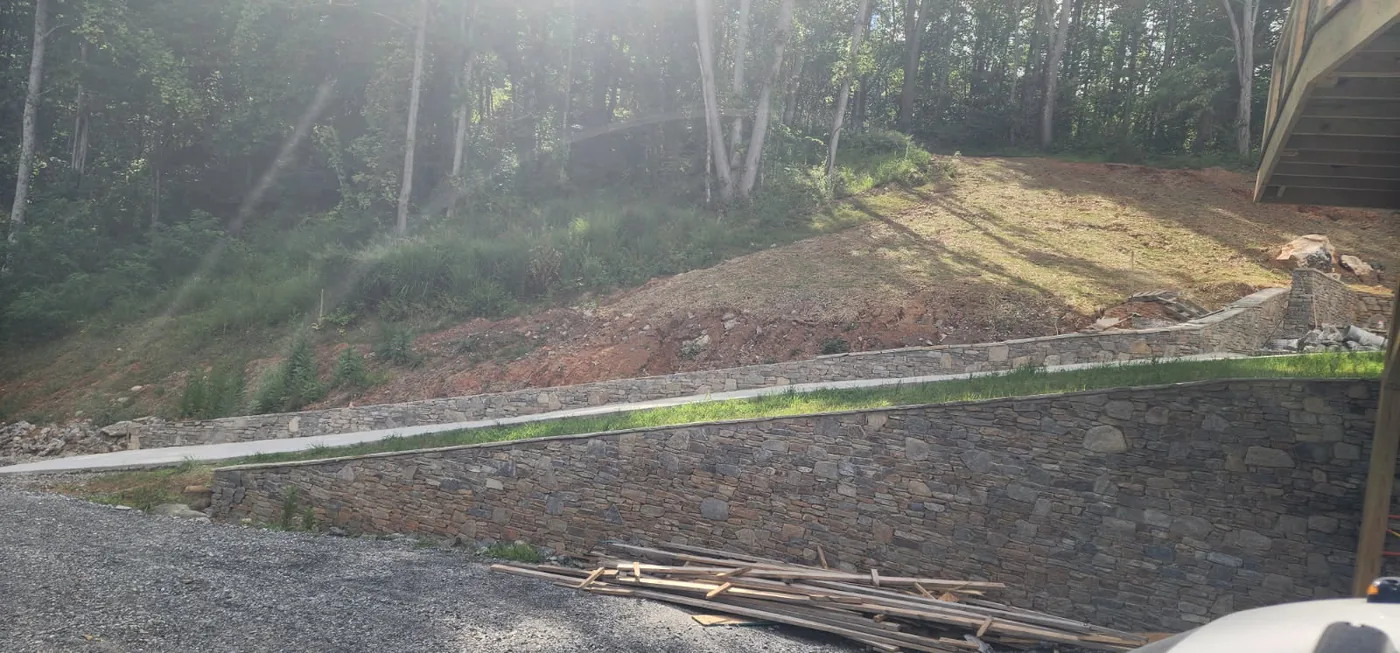
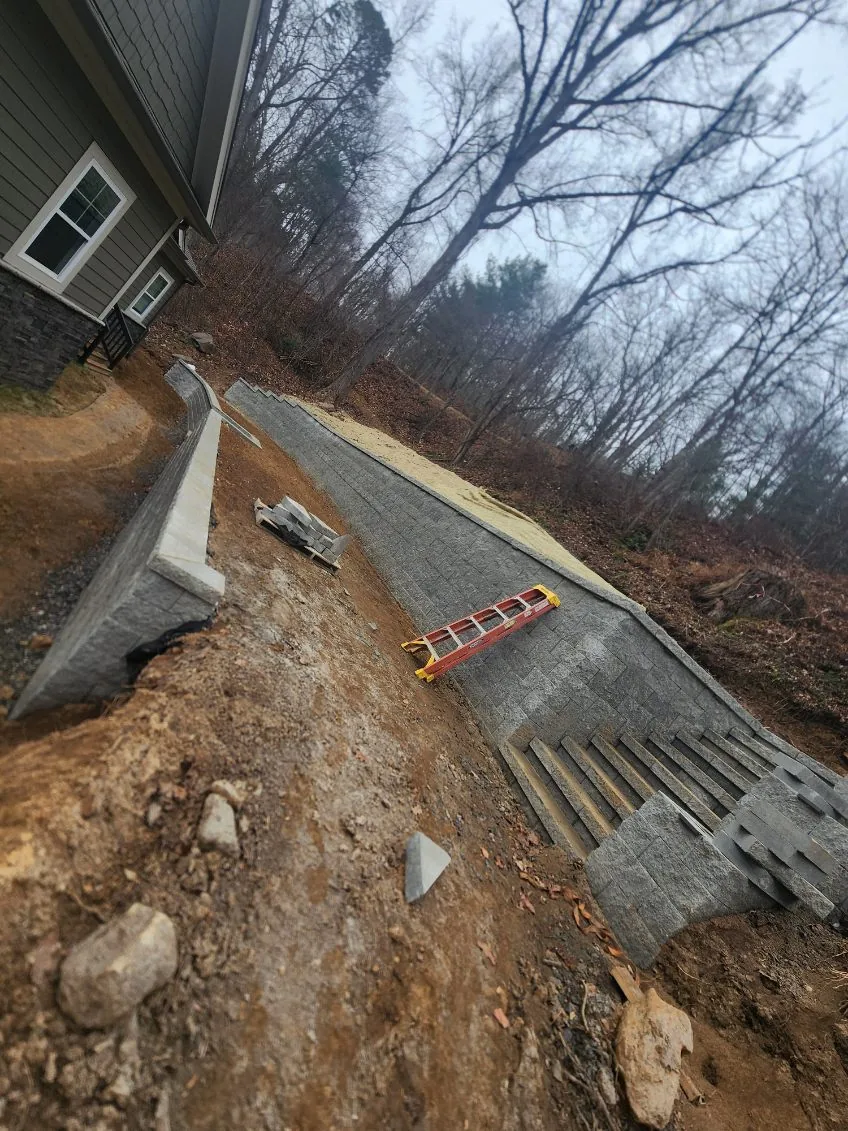
On a slope lot, the water arrives from above and has to leave below. A retaining wall that only holds back dirt will hold back water too, and hydrostatic pressure is what tips walls over after the first really wet spring. The walls that last in this valley are built with gravel backfill, perforated drain pipe, and a daylight outlet that sends the water somewhere it can actually go. On valley-floor lots the problem inverts: the water table sits close to the surface, so a patio base needs to drain downward and outward, not just sit on top of saturated clay. Federal records show 19 declared disaster events touching this county across 1973-2026, and the storm and flood family dominates them, which is the region telling you what it does. Climate context from the National Weather Service is worth a look before you finalize a grade plan.
What Swannanoa builds, and what it costs
Project mix in this valley is fairly consistent: paver or flagstone patios behind the house, a retaining wall where the yard steps up or down, a fire pit as the anchor, and a walkway stitching the pieces together. Prices track three variables — square footage of patio, vertical feet of wall, and how much water management the lot demands. The table below is a working range, not a quote; every job here needs eyes on the grade before a number means anything.
| Scope | Typical range | What moves the price |
|---|---|---|
| Paver patio, 200-400 sq ft | $4,500-$11,000 | Base depth, slope, edge restraint |
| Flagstone patio, natural stone | $9,000-$22,000 | Stone source, cut vs. irregular, thickness |
| Segmental block retaining wall | $38-$65 per sq ft of face | Height, engineering, backfill drainage |
| Fire pit, stone or block | $1,800-$6,500 | Gas vs. wood, seating wall, footprint |
| Walkway or stoop, stone | $2,500-$9,000 | Linear feet, steps, frost depth |
| Drainage and grading add-on | $1,500-$8,000+ | Where the water has to go, outlet distance |
Walls above a certain height stop being a landscape decision and become a structural one. The NC Licensing Board for General Contractors sets the threshold where a project needs a licensed general contractor, and tall or load-bearing walls near a house or property line usually cross it. The county cost table at retaining wall cost in Buncombe County breaks the wall line items down further if you are pricing that piece first.
Why retaining walls fail here, and what the fix costs
The wall failures we see in Swannanoa almost never start with bad block. They start with a wall built as a stack of stone against wet clay — no gravel, no pipe, no outlet. Water saturates the soil behind it, the soil swells and pushes, and by the second or third wet season the wall is leaning. Rebuilding is usually cheaper than it sounds if the block can be reused, but the drainage behind it has to be part of the rebuild or you will be doing it again.
Base preparation is the other quiet failure point. Swannanoa's clay holds water and moves when it freezes and thaws, so a patio base compacted in lifts over properly graded subsoil behaves very differently from one dumped on top of the existing grade. The International Code Council publishes the model codes local jurisdictions adopt, and the frost-depth and footing provisions in those codes are the reason a wall or stoop here is built deeper than the same wall in the flatlands. If you are weighing repair against replacement, the contractors who actually work this valley are listed at retaining wall contractors in Swannanoa, and it is worth talking to more than one before committing to a rebuild.
Fire pits, patios and the outdoor room
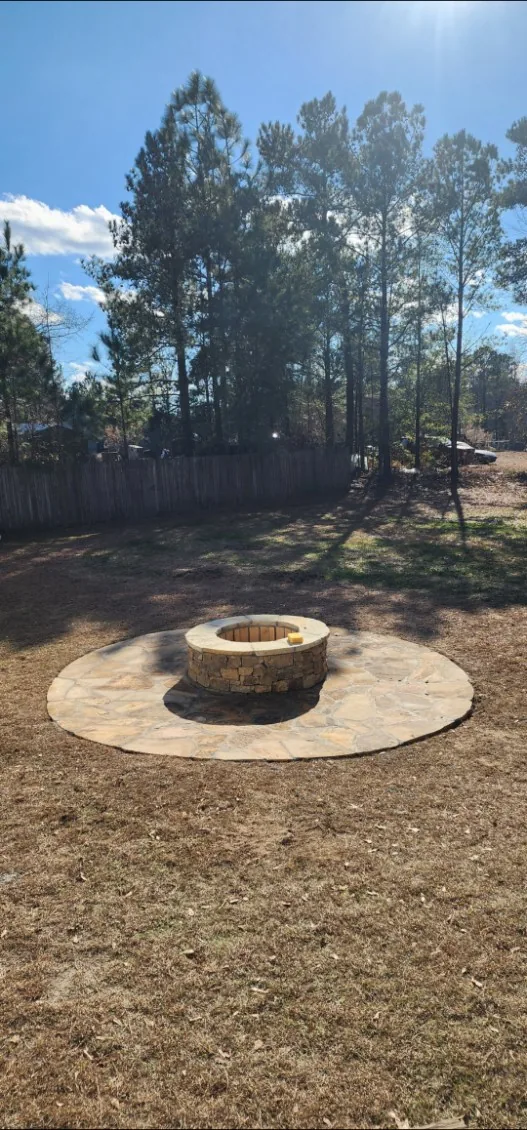
The fire pit is usually what the homeowner pictures first, and in this valley it is genuinely usable most of the year. What changes the design is wind and where the smoke goes — a pit tucked against the uphill slope will smoke the house, while one set on the downhill edge draws clean. Gas pits avoid the smoke question entirely at a higher install cost; wood pits stay cheaper and more social but need clearance from any structure or overhanging limb, and the setback rules come from the same code family the county enforces.
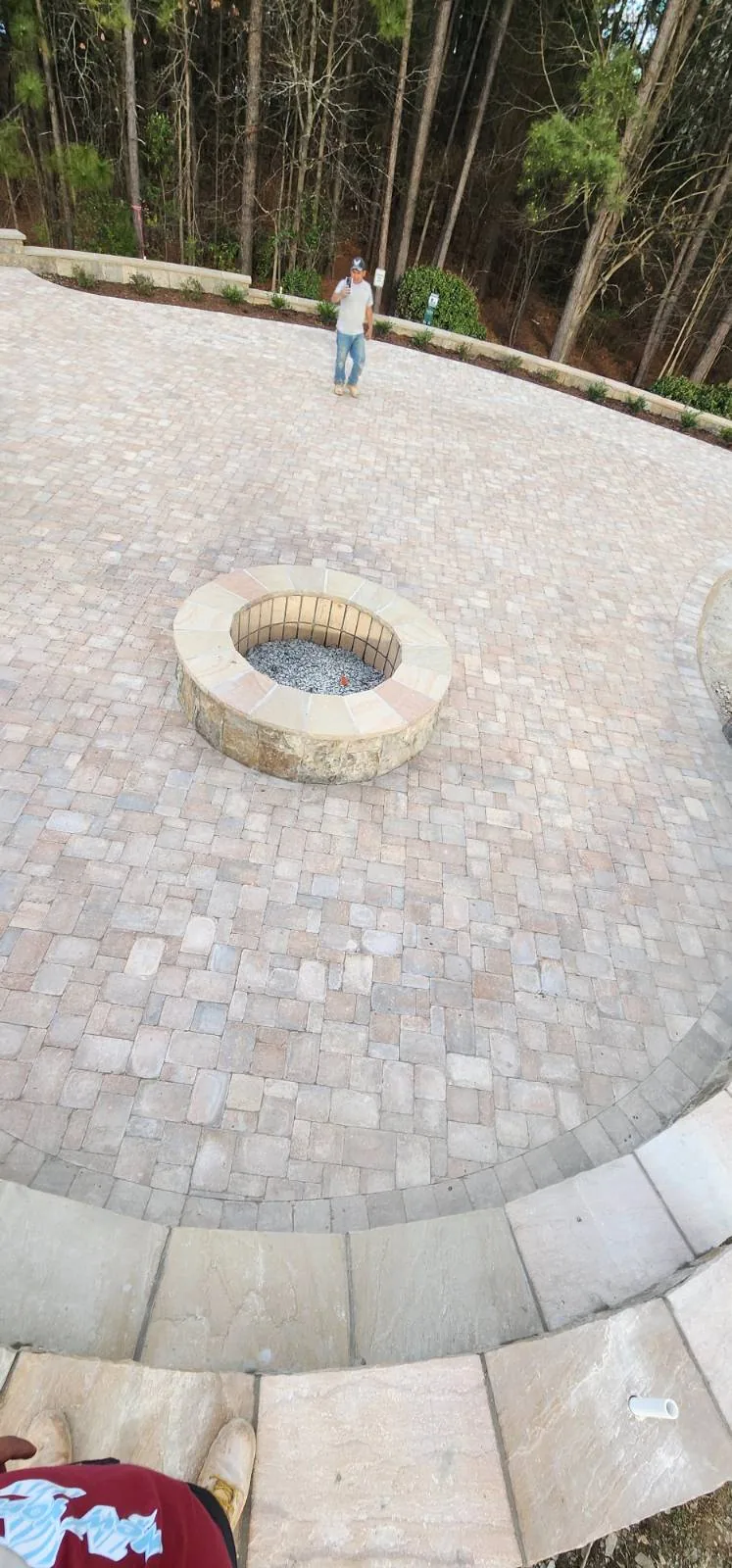
Patio material choice matters more here than in drier markets. Pavers handle freeze-thaw well and are easy to lift and re-level if a section settles; natural flagstone costs more but reads as the mountain West it is. Under either one, the base is what decides whether the patio is flat in five years or rutted. When the hardscape is planned as a whole — patio, wall, walkway, drainage — the pieces share one grade plan and one outlet, which is almost always cheaper than solving each in isolation. The hardscaping overview covers how those pieces fit together before you start collecting quotes.
Getting an honest number in this valley
Two checks separate the bids worth considering. First, ask where the water goes — a contractor who points at a downhill outlet, a dry well, or a curb and explains the path is thinking about the lot, not just the stone. Second, ask what happens when the wall is tall enough to need engineering or a licensed general contractor, and who handles that. A bid that carries a drainage line item and an engineering line item is not more expensive than a cheaper bid; it is the same project with the unspoken parts written down. For anything touching a structure or a steep grade, the NC Department of Insurance codes office is the reference point for what the local inspection authority will look for.