Access and haul drive the number here, not the stone
Canton sits in a valley where paper-mill-era streets flatten out near the Pigeon River, then climb hard the moment you turn toward the ridges. That split decides patio pricing. A backyard off Park Street with a flat, wide drive lets a truck back stone and base material right to the work zone. A property up Crawford Road or off the steep side of Chambers Mountain often can't. When a dump truck can't reach the excavation, every yard of base gravel and every pallet of flagstone moves by hand or through a conveyor, and labor that was a line item becomes the line item.
Haul distance matters too. Flagstone is heavy per square foot, and most jobs here are pulling from regional quarries in the mountains or the Piedmont. A longer run raises freight on the pallet, so a patio that looks identical to one in Waynesville can carry a materially different stone cost. Ask any bid to show the base depth, the stone thickness, and how material reaches the hole. Those three answers are the whole estimate.
Consider the drive up to a lot off Henson Cove Road: the grade is deceptive, the turn radius tightens near the top, and a loaded tandem dump truck simply won't make it. That doesn't kill the project, but it changes it. Stone arrives on a smaller truck at the bottom, gets staged, and then goes up on a tracked carrier or by wheelbarrow, one yard at a time. Each of those trips adds labor hours that a flat-lot bid never accounts for. On the flip side, a lot off Love Lane or near the recreation park often has a wide, gentle approach where a truck can pull within twenty feet of the excavation. Same flagstone, same square footage, dramatically different installed cost.
Quarry distance is the other half. Canton sits roughly between the Tennessee line and the Piedmont, and flagstone sources are scattered across that span. A pallet's freight charge scales with miles and weight, and flagstone is heavy. When a homeowner asks why their quote is higher than a friend's in a different town, the answer is usually sitting on the driveway, not in the stone yard.
What a Canton flagstone patio actually costs
Use this table as a scope-versus-price-range guide, not a quote. Slope, access, and drainage each move the number within its band.
| Scope | Typical range | What drives it |
|---|---|---|
| Small patio, 150-200 sq ft, flat access | $3,800-$7,500 | Base depth, stone thickness, edge restraint |
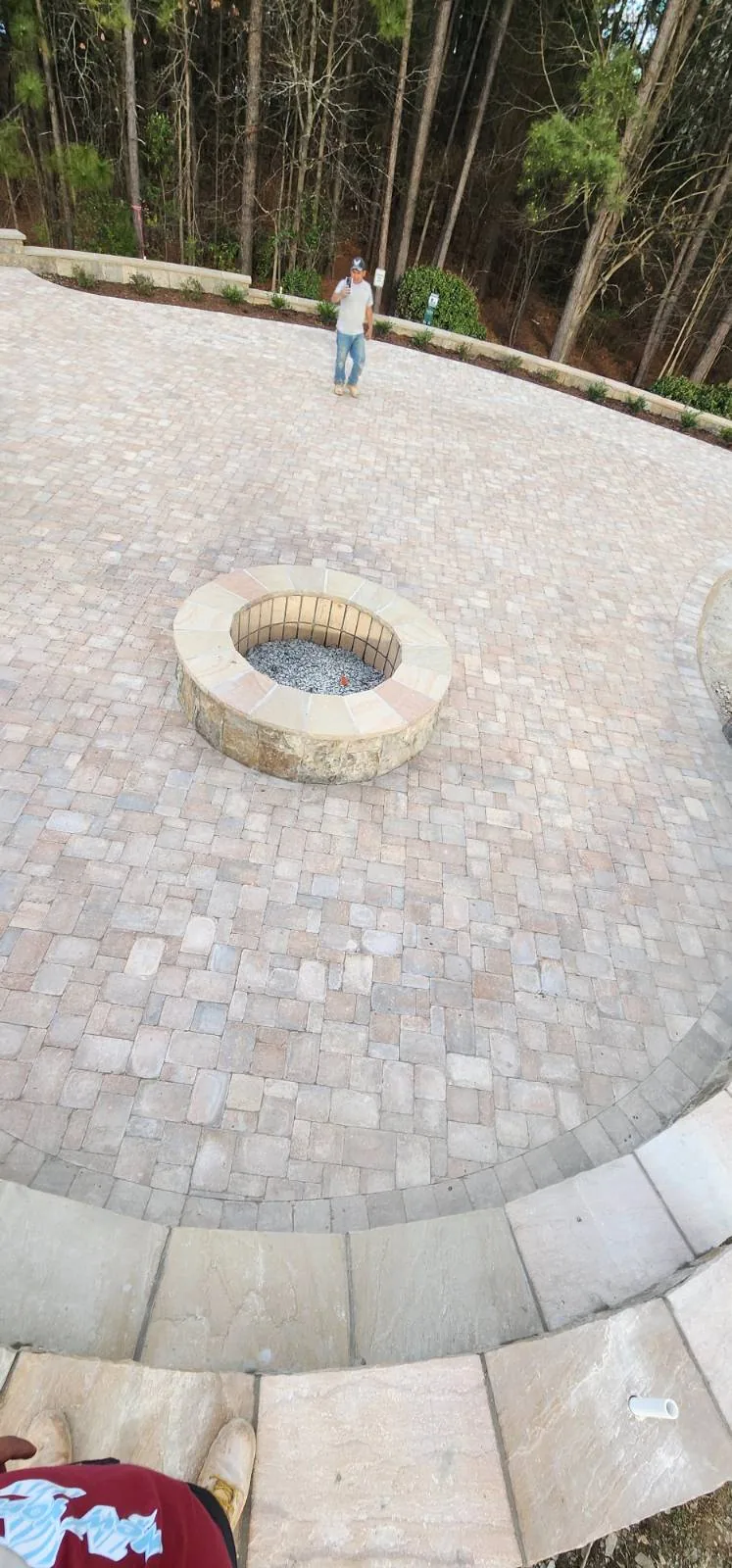
| Standard patio, 200-350 sq ft, flat to mild grade | $6,500-$18,000 | Square footage, cut versus natural edge |
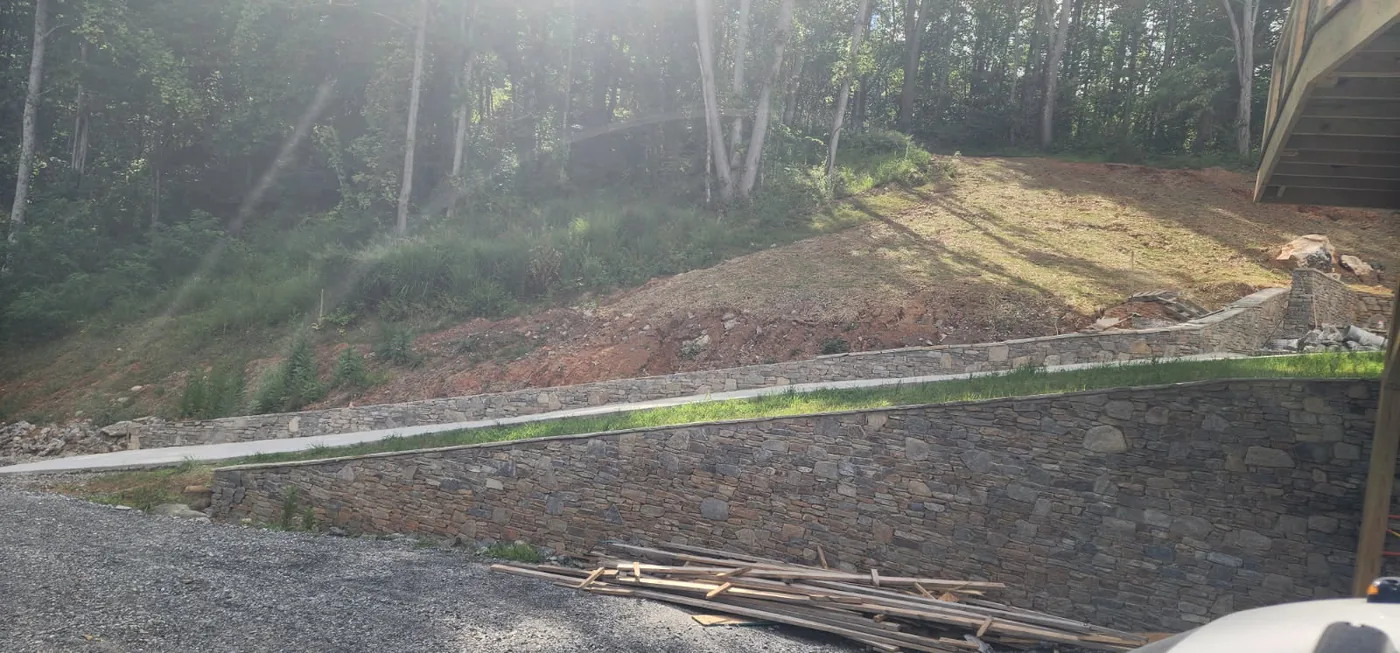
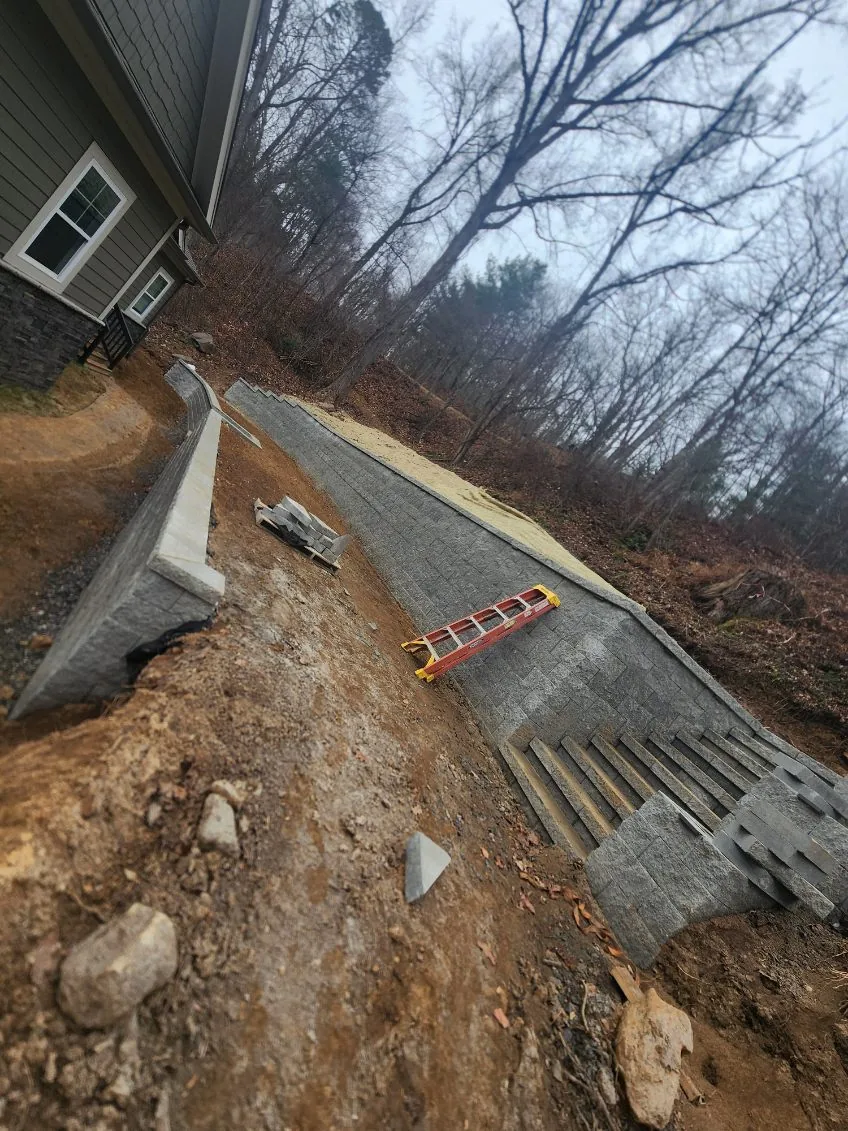
| Sloped or terraced build with steps | $18,000-$34,000+ | Excavation on grade, retaining, step count |
| Hand-carry or conveyor access surcharge | Add 15%-35% | Truck reach, distance from driveway to hole |
| Drainage correction (French drain, regrade) | $1,200-$4,500 | Where uphill runoff goes, soil type |
Three of those rows are access costs that a flat-lot quote never shows. Treat a bid without them as incomplete, not cheap.
Here is how the bands shake out in practice on Canton ground. A modest 12-by-16 patio behind a house off Oak Street, with the truck able to park on a level drive, often lands near the lower end of the standard range because excavation is quick and stone moves short distances. Move that same patio to a hillside lot above the old mill district, where the only flat spot is the patio itself, and the number climbs toward the top of the band. Add a set of broad stone steps down from a back door and a short retaining edge on the downhill side, and you are into the terraced row.
The drainage line is the one homeowners most often skip. On a slope, water from above has to go somewhere. If it currently sheets across the yard and into the house foundation, a patio built on top of that path will trap it or channel it wrong. A French drain or a regrade usually costs a fraction of what water damage costs later, and it belongs in the same scope, not a separate emergency down the road.
Water and freeze cycles are the real enemy
Haywood County gets serious freeze-thaw swings, and a patio is only as good as what's under it. The federal disaster record tells the story: 19 declared events touch this county (1973-2026), overwhelmingly storm and flood family. Every one of those pushed water at patios and foundations built for a drier assumption. On a Canton slope, water arriving from above is the reason a patio heaves or settles, and the drainage question has to be answered before the first stone is set.
Excavation, compacted base, and pitch away from the house get specified because they work, not for markup. The NC Office of State Fire Marshal code services and the International Code Council treat site drainage and frost protection as first-class concerns for a reason. If a patio ties into a retaining wall or a step-up to a door, those assemblies have their own requirements, and the wall work should be scoped on the Haywood County retaining wall cost page before it's bundled into a single patio number.
What freeze-thaw actually does to a poorly built patio is predictable. Water seeps into the base, freezes, expands, and lifts the stone slightly. It thaws, settles unevenly, and repeats. A season or two of that leaves a patio that rocks underfoot and sheds water toward the house instead of away. The fix is not a thicker stone; it is a deeper, well-compacted base with proper drainage. In Canton's climate, that base is the difference between a patio that lasts a decade and one that needs redoing in three years.
The National Weather Service records for this part of western North Carolina show how quickly mountain weather turns, which is exactly why builders here account for water before they account for aesthetics. A patio that looks beautiful in July but pools water in January was designed for the wrong climate.
Matching the build to the ground you own
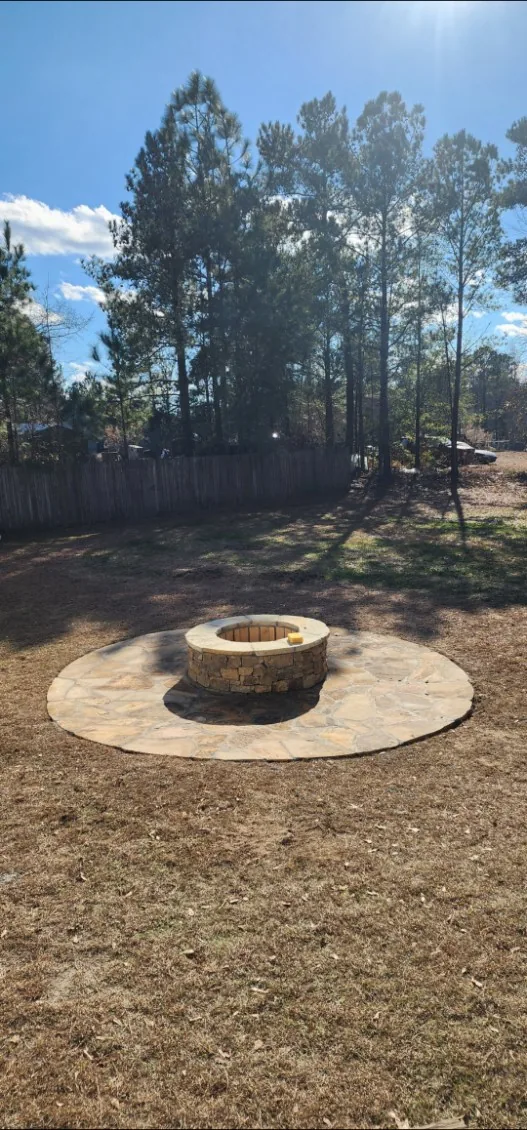
A flat backyard near the river takes a straightforward dry-laid or mortared patio. A terraced hillside lot above town usually means cut-and-fill, retaining at the low side, and steps carved into the grade. Those are different scopes and different crews. The flagstone patio guide walks through the dry-laid versus mortared call and when each is the honest answer.
Because so many Canton patios sit on or against a slope, the wall crew and the patio crew are often the same job. If there's a wall holding the patio up, start with retaining wall contractors in Canton and let the patio scope follow the wall design, not the other way around.
The housing stock shapes this too. Older homes near the center of town, some dating back to the mill era, often have yards that were graded decades ago and have since settled. Newer builds on the ridges were graded with modern equipment and may have cleaner slopes but steeper ones. A crew that has worked both kinds of lots knows to check the soil before assuming anything. Heavy clay holds water; rocky fill drains fast but shifts. The right base detail depends on which one you're standing on.
There is also the question of how the patio meets the rest of the yard. In Canton, a patio often becomes the link between a back door, a garden, and a path to the street. That means steps, edges, and transitions matter as much as the stone field itself. A well-built patio reads as part of the property; a poorly integrated one looks bolted on. The details that make the difference are usually the ones a flat-lot bid never mentions.
How to hire without getting a flat-lot bid on a slope lot
The single most common mistake on a Canton hillside is accepting a per-square-foot number quoted for flat ground. Ask three questions: How does material reach the excavation, and does the price assume hand-carry? What's the base depth and compaction spec? And where does the uphill water go? A crew that answers all three in the bid is pricing your property, not a catalog. For anything tied to a wall, a deck, or a structure, check the contractor's standing through the NC Licensing Board for General Contractors, since licensing thresholds apply once a project crosses them. And confirm the crew has set stone on your grade before, not just on a showroom floor.
Ask to see a project on a similar slope, ideally one a couple of winters old. A patio that has been through two freeze-thaw seasons tells you more than any brochure. Look at whether the stones still sit flush, whether water drains away from the house, and whether the edges have held. Those are the signs of a build that was priced for the ground it sits on, not for a flat lot in a catalog photo.
Get the scope in writing with the access method, base depth, drainage plan, and edge treatment named. If a bid is a single line item, ask for the breakdown. Contractors who know their trade will happily explain where the money goes, and the ones who won't are telling you something too. On a Canton slope, the difference between a good patio and a bad one is almost never the stone. It is everything under it and everything it took to get the stone there.